
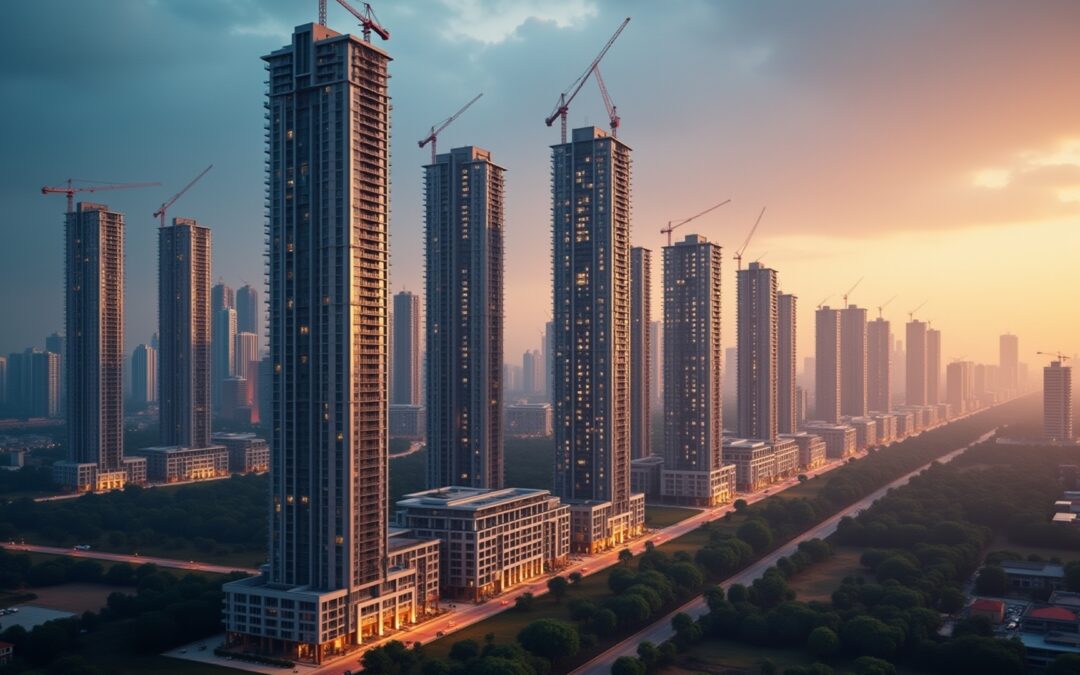
India’s real estate sector is at a pivotal juncture marked by an unmistakable shift in growth trajectories from saturated metropolitan hubs to emerging non-metro cities. This reorientation presents a strategic opportunity for developers, institutional investors, and urban planners to tap into a less congested but rapidly evolving market landscape. Non-metro cities, driven by a unique convergence of economic, infrastructural, and policy initiatives, are increasingly becoming critical engines of growth that promise diversified real estate portfolios, sustainable urban expansion, and long-term asset appreciation.
Key Business Drivers Catalysing Expansion in Non-Metro Real Estate Markets
The transformation of India’s non-metro real estate is not incidental but underpinned by seven interlinked strategic forces that are redefining market dynamics and investment frameworks.
- Rise of Industrial and Commercial Ecosystems: The decentralisation of manufacturing and service sectors, buoyed by government-backed industrial corridors and Make in India initiatives, is fueling the development of industrial parks, warehousing hubs, and Grade A office facilities in tier II and III cities. This is deeply aligned with demand from global capability centres (GCCs) and multinational enterprises rethinking their geographic footprint.
- Robust Demand for Affordable and Mid-Income Housing: Non-metro cities present a compelling value proposition due to their affordability, burgeoning local employment opportunities, and rising middle-income demographics. These factors are driving sustained housing absorption beyond metros, specifically in quality residential developments that appeal to salaried professionals and young families.
- Infrastructure Upgrades and Enhanced Connectivity: Major investments in transport infrastructure—including metro rail expansions, regional airports, and improved highways—are turning these cities into practical and attractive alternatives for business and living. Enhanced connectivity also reduces logistical costs, improving the viability of commercial and industrial assets.
- Growing Institutional Capital Allocation: Investors and REITs are increasingly broadening their geographic and asset-class exposures to non-metro markets, recognising their potential for superior yield, diversification benefits, and stable cash flows amid metro market saturation and pricing pressures.
- Proactive Governmental Policies and Urban Planning: National schemes focusing on affordable housing, smart cities, and industrial development corridors are creating an enabling environment that underpins sustainable urbanisation and real estate maturation in these regions.
- Proptech Integration and Digital Market Access: Digital platforms are playing a transformative role by enhancing market transparency, enabling data-driven decision making, and expanding reach to end-users and investors, thereby accelerating sales velocity and operational efficiencies in emerging locations.
- Focus on Sustainability and Quality Asset Creation: Increasing adoption of green building standards and sustainability practices—driven by evolving regulations and buyer preferences—is enhancing the long-term competitiveness and appeal of non-metro real estate assets.
Strategic Implications for Industry Stakeholders
For developers, the non-metro shift demands a recalibration of project design philosophy, emphasizing asset quality, mixed-use integration, and long-term urban synergy rather than purely volume-driven growth. This requires a nuanced understanding of local economic drivers and evolving consumer profiles to tailor developments that resonate with regional market realities.
Institutional investors and REIT managers stand to benefit from early-mover advantages by deploying capital into these high-growth pockets. Commercial leasing markets, stimulated by GCCs and multinational decentralisation strategies, underpin rising demand for Grade A office and industrial assets. This fosters robust leasing velocity and occupancy, which are critical for sustainable income generation and asset valuation uplift.
Urban planners and policymakers play a crucial coordinating role in ensuring infrastructure, connectivity, and sustainability benchmarks align with market needs. Their support facilitates environments conducive to stable pricing power, reduced vacancy rates, and increased market confidence—essential for attracting further institutional capital and fostering resilient urban ecosystems.
Looking Forward: Harnessing Non-Metro Real Estate for Strategic Growth
India’s non-metro cities are evolving from peripheral alternatives into complementary growth hubs that enhance the depth and resilience of the national real estate market. For strategic decision-makers, investing in these markets entails an informed, data-driven approach that leverages proptech insights, aligns with government urban initiatives, and prioritizes sustainable development practices.
Incorporating non-metro assets into broader portfolio strategies not only diversifies risk but also captures untapped growth potential amid a transforming economic landscape. As infrastructure improves and institutional interest intensifies, these emerging hubs will increasingly drive India’s real estate sector’s next phase of expansion, innovation, and value creation.
Ultimately, the sustained growth in non-metro markets represents a strategic imperative for developers, investors, and urban stakeholders committed to fostering inclusive economic development while enhancing asset quality and long-term market competitiveness.