
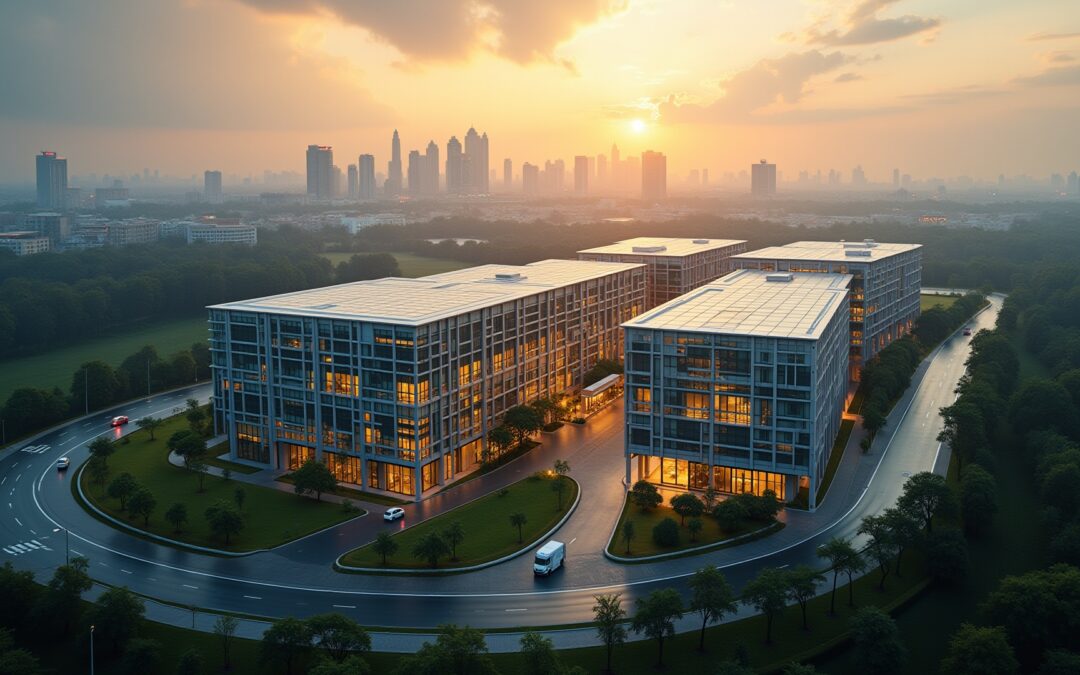
India’s life sciences sector is rapidly evolving from a vaccine-production hub to a comprehensive innovation ecosystem, a shift that is profoundly influencing commercial real estate and urban development strategies. This transformation signals new opportunities and challenges for developers, investors, and policymakers who must adapt to the sector’s unique demands for specialized infrastructure in office, industrial, and mixed-use environments.
The substantial growth in life sciences innovation is driving robust demand for purpose-built commercial spaces such as advanced laboratories, R&D facilities, and biotech parks. These assets differ markedly from generic commercial real estate, requiring stringent compliance with regulatory standards, cutting-edge technological integration, and sustainability benchmarks. As a result, quality expectations and asset valuation metrics are being elevated across these niche real estate segments.
For real estate developers and investors, this sector’s expansion necessitates a strategic pivot towards creating high-value, specialized projects that cater specifically to life sciences enterprises including pharmaceutical companies, biotech startups, and medical tech innovators. Notably, while metro cities remain primary hubs due to talent pools and infrastructure, emerging tier II cities equipped with improving infrastructure and connectivity are attracting increased life sciences activity, accelerating the growth of new urban corridors.
This spatial shift highlights the growing confluence between commercial real estate, urban infrastructure, and residential development. Life sciences campuses require integrated ecosystems combining industrial, office, and supporting housing facilities to attract and retain a skilled workforce. Such mixed-use development models present forward-looking developers with opportunities to capitalize on longer-term urban growth patterns that are increasingly innovation-driven.
Institutional investors and REITs are likewise recognizing the value proposition in specialized life sciences real estate. Purpose-built innovation parks provide differentiated income streams and asset diversification, making them attractive instruments within portfolios focused on knowledge economy sectors. The rise in foreign direct investment into India’s life sciences-linked real estate further underscores the sector’s growing importance as a catalyst for capital inflows and market maturity.
Moreover, as sustainability becomes a defining factor for institutional capital, the life sciences sector’s emphasis on environmentally compliant and energy-efficient campuses aligns closely with the real estate industry’s shift towards green buildings and enhanced asset longevity. Developers who integrate ESG principles into their projects can command pricing premiums while meeting evolving policy frameworks and investor expectations.
Despite these opportunities, life sciences real estate development presents complexities including high capex requirements, extended leasing cycles, and technical compliance demands. Stakeholders must therefore engage in meticulous planning and collaboration across urban planners, architects, regulators, and capital providers to ensure delivery of assets that are both cutting-edge and commercially viable.
In conclusion, India’s transformation into a life sciences innovation hub is redefining demand profiles and development strategies within commercial real estate and urban growth. Real estate leaders, investors, and policymakers must realign their portfolios and planning frameworks to tap into this specialized, innovation-centric market segment, ensuring assets remain competitive and aligned with future industry trajectories.