
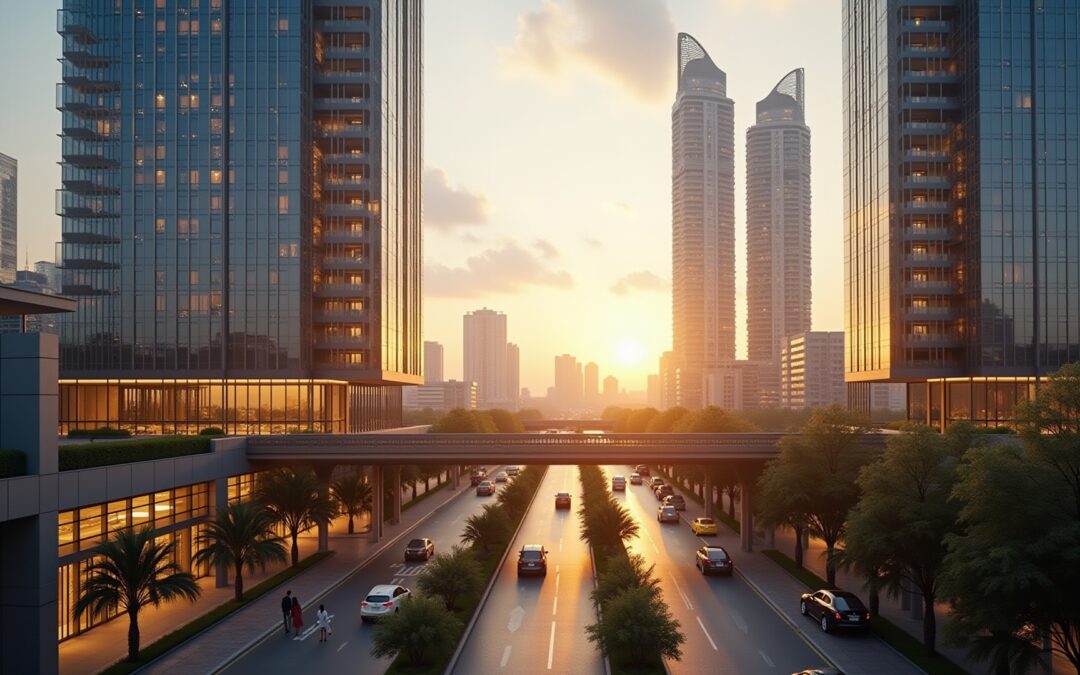
India’s commercial real estate market is poised for a transformative leap, with forecasts projecting its value to reach USD 116.26 billion. This milestone signals more than just market expansion — it underscores a maturing urban and economic landscape that is increasingly attractive to institutional investors, developers, and occupiers. For senior decision-makers in real estate, understanding the drivers and implications of this growth is essential to navigating the evolving opportunities within India’s dynamic commercial property sector.
The robust growth projection is anchored by fundamental shifts in India’s urbanisation, economic diversification, and workplace culture. Global Capability Centres (GCCs) continue to fuel sustained demand for high-quality Grade A office spaces, as enterprises seek modern, flexible environments that support digital operations and talent-centric workplaces. Beyond metropolitan hubs, emerging tier II and tier III cities are becoming vital nodes for commercial leasing activity, capitalising on improved infrastructure and shifting business geographies.
Institutional interest plays a pivotal role in shaping the market’s growth trajectory. Increasing inflows of capital through Real Estate Investment Trusts (REITs) and other institutional vehicles reflect growing confidence in the transparency, asset quality, and income-generating potential of India’s commercial real estate. For investors, this evolution marks a shift towards more sophisticated portfolio strategies focused on diversification, long-term yield stability, and risk-adjusted returns.
Developers, meanwhile, are incentivised to align product offerings with market demands that increasingly favour integrated, technology-enabled commercial ecosystems. The convergence of office, retail, and warehousing components into blended-use developments presents opportunities to create higher value assets that respond to occupier needs for convenience, connectivity, and sustainability. Embracing proptech solutions can optimise asset management, enhance tenant experiences, and drive operational efficiencies.
From an urban development perspective, the commercial real estate boom highlights the critical need for supportive infrastructure and policy frameworks. To sustain this momentum, collaboration between policymakers and industry stakeholders is vital to foster regulatory environments that encourage sustainable growth, strengthen transport and digital infrastructure, and enable seamless urban integration of these expanding commercial zones.
Leadership within commercial real estate firms must pivot towards innovation, embedding sustainability principles in design and operation, and leveraging data analytics to enhance decision-making on occupancy optimization and rental pricing. These strategic priorities will underpin competitiveness and resilience in a market characterized by rapid evolution and shifting occupier preferences.
In conclusion, the projected rise of India’s commercial real estate market to over USD 116 billion is a marker of its strategic importance in the country’s broader economic development narrative. For investors, developers, and policymakers alike, this growth trajectory demands a forward-looking approach that balances asset quality, urban integration, and sustainable practices to capture the full potential of India’s expanding commercial property ecosystem.