
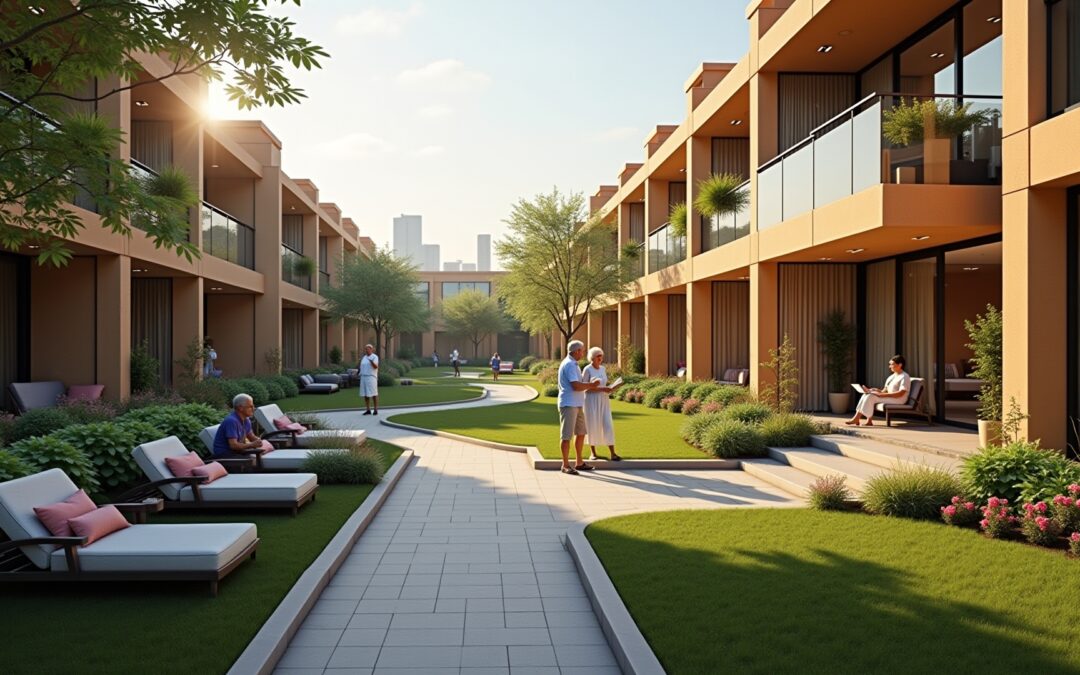
India’s real estate sector is undergoing a subtle yet significant transformation as senior living communities gain prominence as a strategic asset class. Traditionally marginalized within the broader residential and commercial real estate landscape, senior living is now emerging as a nexus of opportunity for developers, investors, and urban planners seeking to align with demographic trends and evolving lifestyles.
The country is witnessing a rapid demographic transition marked by an expanding senior population driven by advances in healthcare and increased life expectancy. This shifting age profile is creating a new demand paradigm where comfort, healthcare integration, security, and community engagement become paramount. Senior living communities tailored to these needs are evolving from social initiatives into commercially robust real estate propositions.
Strategic Implications for Real Estate Stakeholders
For developers and investors, senior living offers a differentiated business model distinct from conventional residential projects. These asset classes typically benefit from longer lease tenures, enhanced occupancy stability, and value-accretive service offerings that blend hospitality, healthcare, and lifestyle amenities. This complexity necessitates specialized development expertise and operational proficiency, pushing the boundaries of traditional real estate practices.
Beyond financial returns, senior living communities are shaping urban growth narratives by advocating for age-friendly urban design, accessible public spaces, and inclusive transport infrastructure. Such developments align with broader sustainability and social inclusion policies that are progressively gaining importance among policymakers and institutional capital providers.
From an investment perspective, senior living is attracting growing interest from REITs and institutional investors targeting low-volatility, income-stable real estate that is somewhat insulated from typical market cyclicality. The premiumisation trend in housing—driven by a rising mid-to-high income senior demographic—adds further appeal by enhancing risk-return profiles and diversifying portfolios traditionally concentrated in residential and commercial real estate.
Critical Considerations for Decision-Makers
Forward-looking real estate leaders must acknowledge senior living as an integral component of future development strategies rather than a niche segment. Key strategic actions include prioritizing dedicated land acquisition for these projects, forging partnerships with healthcare and lifestyle service providers, and leveraging proptech-enabled asset and resident management to optimize operational outcomes and maintain competitive advantage.
Data-driven insights into demographic shifts, urban migration patterns, and infrastructure enhancement in tier II and III cities will prove essential. As these smaller urban centers improve their socio-economic and infrastructural fabric, they represent fertile ground for expanding senior living footprints beyond metro-centric development.
Conclusion: Positioning for a Demographic-Economic Transformation
Senior living is set to redefine India’s real estate growth trajectory by integrating housing, healthcare, and community-centric living into a future-proof sector. This intersection creates a compelling value proposition for stakeholders focused on long-term asset quality, social impact, and resilient commercial returns. Proactive engagement now will enable developers, investors, and urban planners to capitalize on this pivotal demographic shift, advancing inclusive urban growth and sustainable real estate investment.