
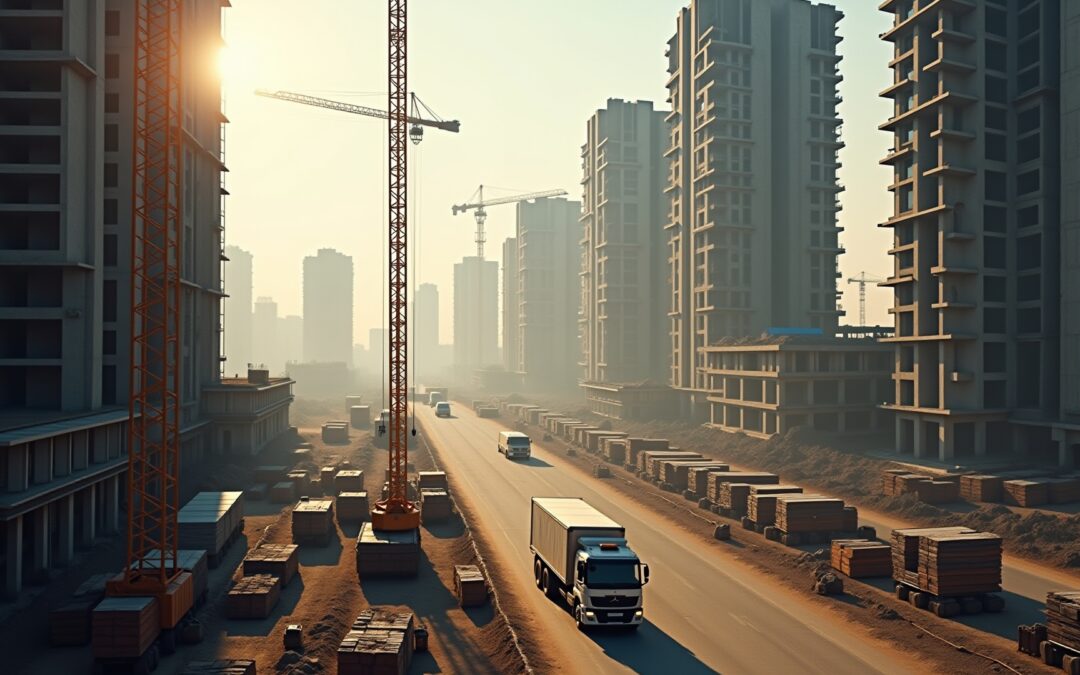
India’s real estate industry is at a pivotal juncture, grappling with significant increases in construction material costs and persistent supply chain challenges. These factors are reshaping development economics across residential, commercial, and infrastructure sectors, compelling industry leaders and investors to recalibrate strategies in sourcing, project execution, and capital allocation.
At the core of this transformation is a geopolitical conflict that has driven steep price escalations in key building materials such as steel, cement, and polymers. Coupled with global trade interruptions, prolonged shipping delays, and domestic logistics inefficiencies, the cumulative pressure on supply chains is driving up costs and contributing to project delays. For a real estate market growing as dynamically as India’s, these disruptions affect not only bottom lines but also the timing and quality of asset delivery.
Strategic Pressures on Developers and Investors
Developers, particularly those focused on mid-income and affordable housing segments, face the challenge of balancing margin sustainability with competitive pricing. The rise in input costs erodes profitability, requiring re-engineered procurement approaches and cost optimization measures. Meanwhile, commercial real estate developments, including office spaces driven by sustained GCC-led leasing demand and growing logistics parks fuelled by expanding e-commerce, encounter elevated development expenses that could influence leasing economics.
Despite these cost headwinds, market absorption remains robust, underscoring the underlying demand strength. Real estate stakeholders must now emphasize innovative construction technologies and diversified sourcing strategies to mitigate risk and control costs. Precision in supply chain management and real-time procurement analytics, increasingly enabled by proptech solutions, are becoming indispensable tools for navigating this volatile environment.
Implications for Urban Infrastructure and Sustainability
Urban infrastructure projects, critical to India’s rapid tier II and III city expansions, are also feeling the impact of rising materials costs and logistical constraints. These pressures could affect project timelines and lead to higher capital expenditure, challenging public-private partnership frameworks and financing models.
At the same time, this cost volatility presents an accelerated impetus for adopting sustainable building practices and alternative materials. Aligning with India’s intensified focus on green buildings and long-term asset quality, developers who integrate sustainability within their cost models are likely to gain enhanced capital market access and tenant preference.
Capital Markets, REITs, and Investor Considerations
Institutional investors and REIT participants must re-evaluate asset valuations and risk profiles in light of this evolving cost landscape. The interplay between supply cost inflation and demand dynamics will shape yield expectations and investment returns. Those with strategic foresight who incorporate supply chain resilience and sustainable development into their investment criteria are positioned to capitalize on India’s expansive real estate growth trajectory.
Looking Forward: Navigating Volatility Through Strategic Innovation
The current spike in construction material costs and supply chain challenges, while imposing short-term hurdles, accelerate a necessary evolution towards resilience and innovation. Real estate leaders who prioritize diversified sourcing, leverage technology for project transparency, and embed sustainability into core development frameworks will sustain their competitive positioning and unlock growth across residential, commercial, and infrastructure asset classes.
Ultimately, India’s real estate sector stands to benefit from leadership that embraces these headwinds as catalysts for modernization and strategic transformation. By adopting agile operational models and forward-looking investment approaches, stakeholders can ensure the long-term quality, profitability, and sustainability of India’s built environment.