
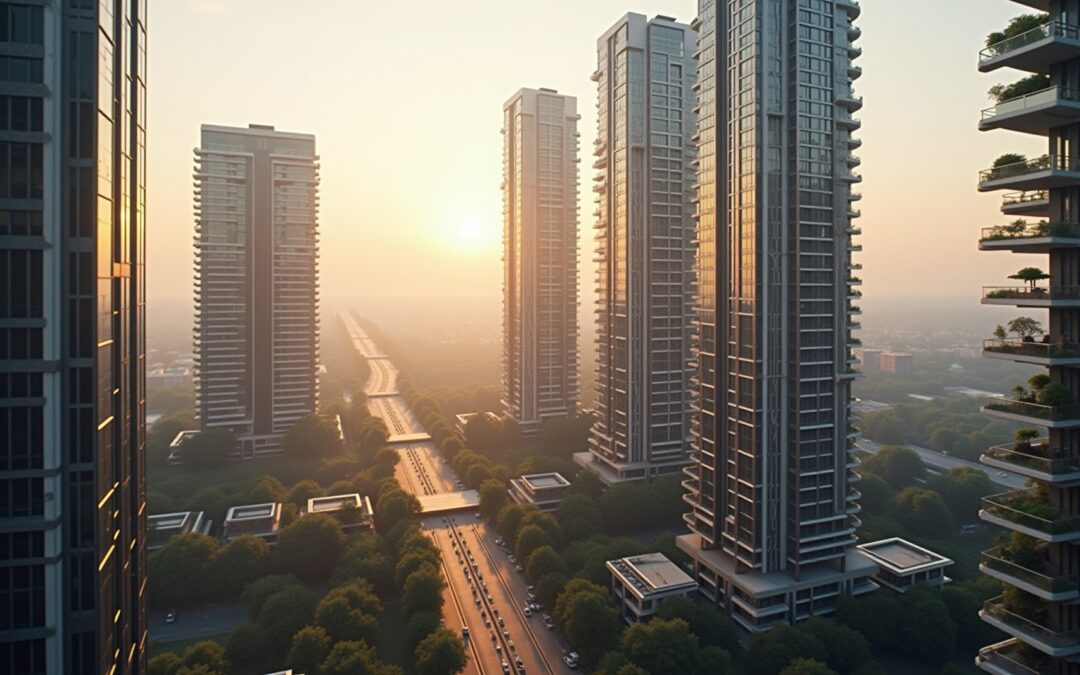
India’s urban real estate landscape is witnessing a strategic transformation anchored by the rise of its tallest residential buildings across major metros. These high-rise residential towers are more than architectural landmarks; they symbolize a fundamental shift in development and investment frameworks in the country’s fastest-growing urban corridors.
As urban land becomes scarcer and infrastructure constraints intensify, these vertical residential developments offer a compelling solution to optimise land use while catering to the evolving demand for premium housing. The rise of India’s tallest residential buildings highlights a premiumisation wave in the housing sector where luxury, exclusivity, and lifestyle converge with advanced construction technology and sustainability.
Strategic Shift in Residential Development and Investment
For developers, the new generation of tall residential towers demands a recalibration of land acquisition and project planning strategies. Building upwards, rather than outwards, requires integration of cutting-edge construction methods alongside environmentally conscious design to meet the expectations of discerning buyers in the luxury segment. It also places a premium on amenities and service standards that can justify higher pricing and maintain long-term asset value.
From an investment perspective, these towers represent high-value assets with significant appeal to institutional capital, including REITs and private equity focused on iconic and income-generating residential properties. Their prime urban locations and differentiated product offerings increase their attractiveness as flagship assets in mixed-use or portfolio-integrated developments. This trend reflects a maturing residential market increasingly influenced by capital market dynamics previously dominant in commercial real estate.
Urban Growth, Infrastructure, and Policy Considerations
The proliferation of towering residential projects inevitably influences urban infrastructure planning. Municipal authorities and policymakers must strategise to accommodate increased population densities without compromising quality of life. Enhancements to public transport, utilities, green spaces, and digital connectivity become crucial enablers of sustainable high-rise living.
Smart-city frameworks that support integrated infrastructure development can enhance the value proposition of these vertical communities. Urban planners face the challenge of balancing densification benefits with improvements in connectivity and public amenities to foster inclusive and resilient city growth.
Implications for Housing Market Segmentation and Urban Strategy
While luxury high-rises set new benchmarks in design excellence and lifestyle, the broader housing ecosystem must continue to address mid-income and affordable housing needs to support balanced urban expansion. However, the innovations and standards established by these landmark towers often cascade to elevate quality expectations across the housing spectrum.
This vertical housing trend is not only a response to land constraints but also a strategic lever for cities aiming to accommodate growth sustainably. It also reflects growing alignment between real estate development, urban planning, and capital market imperatives — a convergence essential for India’s evolving urban ecosystem.
Looking Forward: Opportunities and Challenges for Stakeholders
India’s tallest residential buildings serve as case studies in managing the complexities of urban vertical living—integrating premiumisation, sustainability, and institutional investment. For developers and investors, the challenge lies in balancing exclusivity with scalability and aligning construction excellence with operational efficiency.
For policymakers and urban infrastructure planners, the opportunity lies in leveraging these towers to pioneer integrated urban developments that enhance livability and long-term asset value. Institutional investors and REITs need to closely monitor these evolving asset classes to capitalise on the premium residential market’s growth potential while supporting urban densification goals.
In essence, these residential skyscrapers are not merely architectural achievements but strategic assets influencing India’s real estate trajectory. They exemplify a sophisticated, capital-driven, and sustainability-oriented approach to urban residential development, underpinning the future of housing in India’s expanding metropolitan regions.