
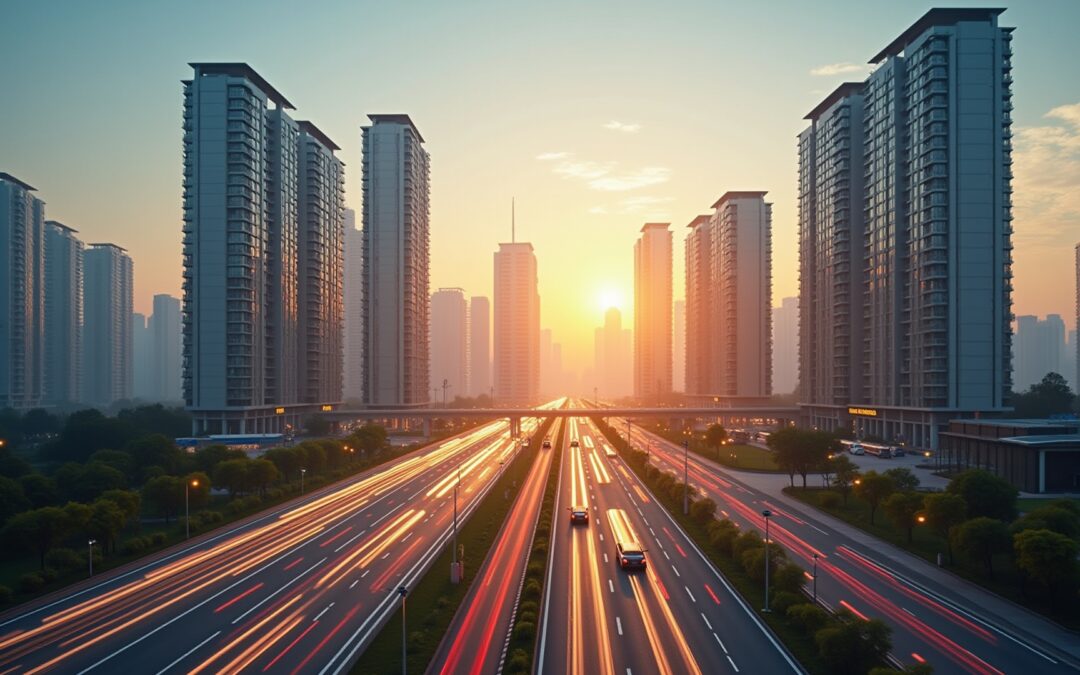
India’s real estate sector is entering a critical phase of transformation as growth momentum progressively shifts away from traditional metropolitan strongholds such as Mumbai, Delhi NCR, Bengaluru, and Chennai, toward emerging tier II and tier III cities. This evolving geographic focus is not merely a relocation of demand; it signifies a strategic realignment with profound implications for developers, investors, urban planners, and policy makers orchestrating the next wave of India’s urban and economic expansion.
Drivers Behind the Geographic Realignment
Historically, India’s metros thrived as epicenters of economic activity and infrastructure development, concentrating residential and commercial demand. Yet, escalating congestion, high land values, and market saturation in these urban cores have catalyzed a deliberate pivot toward smaller cities exhibiting accelerated urbanization and improved infrastructure connectivity.
- Infrastructure Development: Government programs such as the Smart Cities Mission, enhanced transport corridors, and improved civic amenities underpin the rising attractiveness of emerging urban centers. These infrastructural investments are foundational to sustaining long-term real estate growth beyond metros.
- Corporate Expansion and GCC Demand: The increasing footprint of Global Capability Centres (GCCs) in non-metro cities is a critical driver of Grade A office space demand. Cost efficiencies combined with access to talent pools are encouraging enterprises to decentralize operations, fostering new commercial hubs.
- Residential Demand Diversification: Affordability constraints in metros, alongside improved income levels in tier II and III cities, are fueling growth in mid-income and affordable housing. This trend expands the addressable market for developers beyond traditionally saturated urban locations.
- Institutional Investment and REITs: Institutional investors seeking portfolio diversification increasingly target high-growth secondary cities that promise attractive yields, scalability, and alignment with sustainable asset strategies.
Strategic Industry Implications
This geographic diffusion demands a recalibrated approach across multiple dimensions of real estate development and investment strategy. Key considerations include:
- Land Acquisition and Development Planning: Developers must engage in nuanced regional market assessments, factoring in localized demographic dynamics, regulatory frameworks, and infrastructure implementation timelines to optimize project viability and asset quality.
- Asset Management and Portfolio Diversification: Investors and REIT participants benefit from mitigating risk profiles and enhancing income potential by incorporating assets from secondary cities exhibiting strong growth fundamentals.
- Proptech as a Strategic Enabler: Digital tools and data analytics are increasingly indispensable for evaluating emerging markets, tailoring tenant mixes, and optimizing operational efficiencies, thus enhancing long-term asset performance.
Urban Growth, Sustainability, and Future-Proofing
The spatial shift also intersects significantly with evolving urban development and sustainability objectives. As tier II and tier III cities expand, real estate stakeholders must prioritize green building practices, smart urban planning, and sustainable infrastructure development. These considerations are vital to future-proofing investments, enhancing environmental compliance, and meeting rising regulatory standards.
Conclusion: Navigating a More Distributed Real Estate Ecosystem
For India’s real estate leadership, the migration of growth beyond metros transcends geographic boundaries—it signals a strategic pivot in how assets are sourced, developed, and capitalized. Success in this emerging landscape requires an integrative approach that combines insight into infrastructure evolution, corporate leasing trends, institutional capital flows, and sustainability imperatives.
Leaders who adeptly anticipate and adapt to these dynamics will not only sustain competitive advantage but will also shape the trajectory of India’s real estate sector as it embraces a more distributed and diversified growth paradigm. The future belongs to stakeholders who harness data-driven decision-making, regional expertise, and a strong commitment to sustainable development in unlocking the potential of India’s evolving urban fabric.