
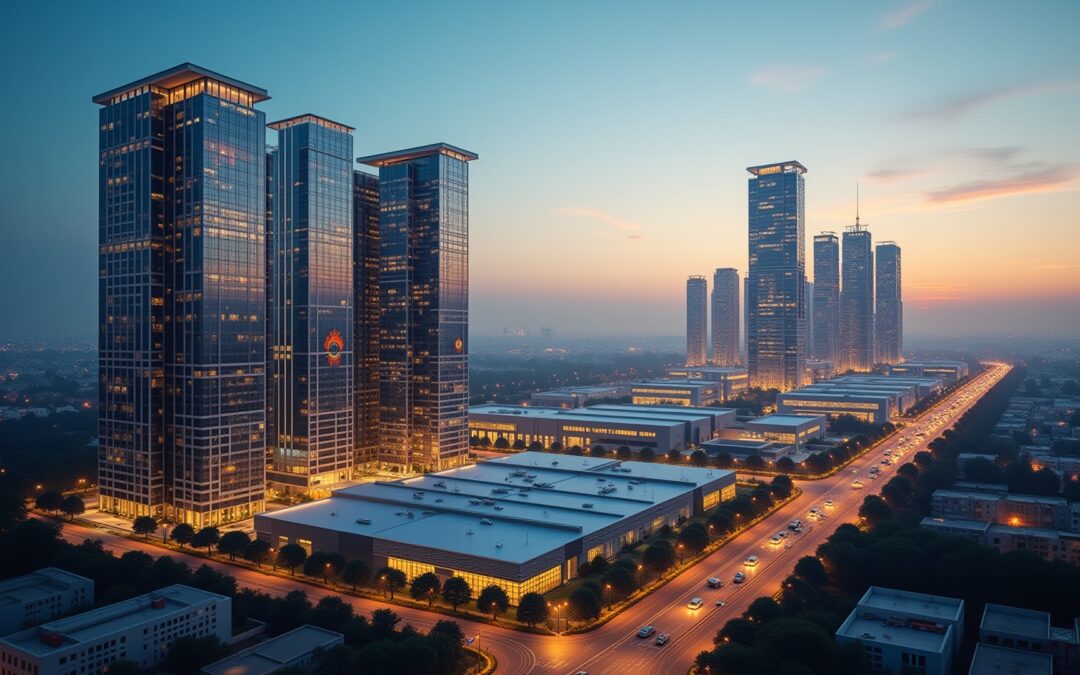
India’s capital markets in the first quarter of 2026 have emerged as a critical catalyst for the real estate sector’s evolving investment landscape. Beyond mere financial indicators, this momentum underscores a transformative phase where investor confidence and capital inflows are actively reshaping strategic priorities across residential, commercial, and logistics real estate. For developers, institutional investors, and commercial real estate leaders, this phase demands nuanced understanding to optimize asset value, align with occupier demand, and future-proof portfolios amid a diversifying real estate market.
Understanding the Capital Market Surge and Its Drivers
The strong expansion in India’s capital markets during Q1 2026 is underpinned by robust macroeconomic fundamentals and a broadening institutional investor base. Improved infrastructure and an expanding inventory of high-quality assets—particularly Grade A offices, retail centers, and logistics parks—have attracted diverse pools of capital seeking stable, income-generating real estate opportunities. This surge is not isolated but integrally linked to the country’s accelerating urbanisation, digitisation, and consumer market growth.
Capital market vitality directly impacts liquidity channels and pricing benchmarks, critical elements for developers looking to finance new projects or refinance existing assets. It also influences how institutional funds, including REITs and listed vehicles, prioritize acquisition and development, favoring well-located and high-quality properties capable of sustaining demand through economic cycles.
Strategic Implications for Developers and Investors
For real estate developers, this period of capital expansion offers expanded avenues to secure diversified funding beyond traditional debt and equity. Institutional capital inflows enable access to REITs and listed investment vehicles, linking asset development more closely with market sentiment and investor expectations. This alignment encourages higher standards in project execution, transparency, and asset management, which are essential to attract and retain sophisticated investors.
Particularly in the commercial segment, sustained demand for Grade A office spaces is reinforced by Global Capability Centers (GCCs) and enterprise occupiers. This steady leasing momentum supported by institutional capital promises enhanced pricing power and occupancy stability. Likewise, the logistics and warehousing domain continues to benefit from strong capital injections, propelled by e-commerce expansion and evolving supply chain efficiencies integral to India’s real economy.
Urban Infrastructure and Growth Corridors as Investment Catalysts
Crucially, the capital market uptrend extends beyond established metro cores, reflecting growing investor interest in tier II and tier III cities. Infrastructure upgrades and urban expansion in these regions are fostering emerging real estate markets that offer attractive risk-adjusted returns. This geographic diversification aligns with government initiatives focused on balanced urban development while enabling investors to spread risk and capture new growth potential.
Developers and investors must therefore adopt calibrated location strategies that emphasize asset quality to meet evolving occupier needs and maximize long-term value. These growth corridors are becoming central to portfolio optimization, underscoring the importance of integrated urban planning and capital market strategies.
Sustaining Momentum Through Innovation, Sustainability, and Data-Driven Decisions
To capitalize on the capital market’s upward trajectory, real estate stakeholders must embed sustainability and digital transformation within their business models. Green building practices not only respond to regulatory trends and environmental imperatives but also enhance asset appeal among discerning institutional investors who prioritize risk-adjusted, long-term returns.
Additionally, leveraging proptech for digital sales platforms and data analytics enhances decision-making around asset development, leasing, and portfolio management. These innovations enable a sharper alignment with occupier preferences and market dynamics, ultimately strengthening competitiveness and resilience.
Conclusion: Navigating the Future of Real Estate Investment
India’s Q1 2026 capital market growth represents more than an uptick in financial activity; it signals a strategic inflection point for the country’s real estate sector. The confluence of robust capital availability, evolving asset-class demand, and expanding urban infrastructure creates a unique opportunity for developers, investors, and occupiers to rethink investment paradigms.
Success in this dynamic environment requires foresight, agility, and a commitment to quality — from project conception through asset management. By harnessing these capital market dynamics with a strategic and sustainable approach, real estate leaders can unlock new value pools and firmly position themselves for India’s next phase of property market expansion and urban growth.