
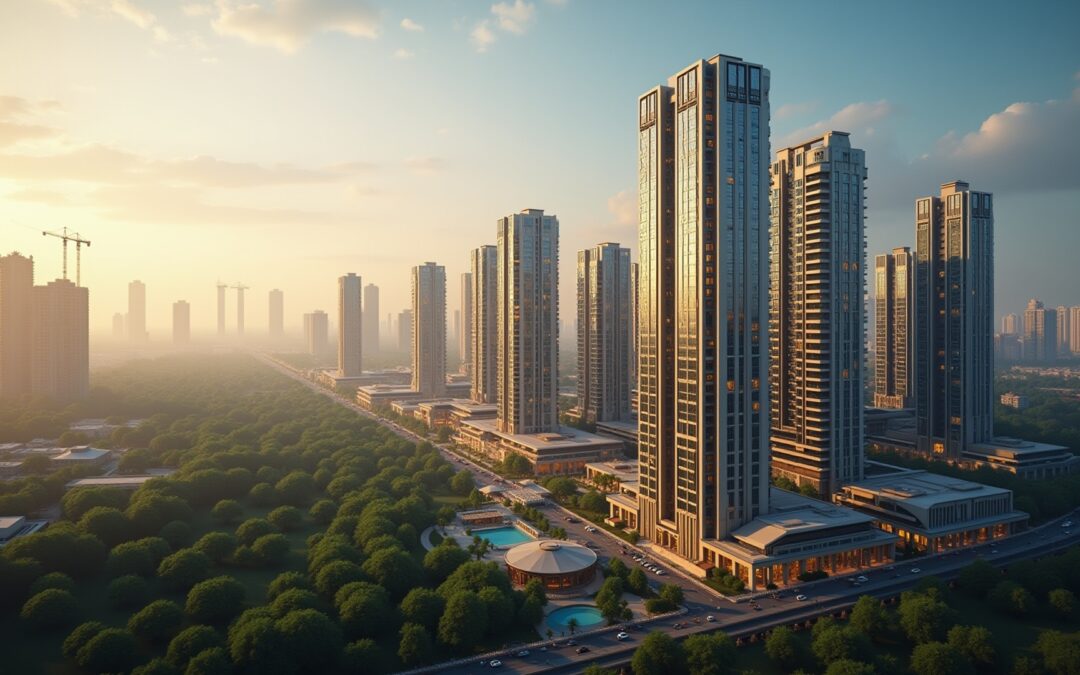
India’s real estate market is witnessing a pivotal shift as robust growth extends beyond traditional metropolitan hubs into tier II and III cities. For industry leaders—developers, investors, institutional capital, and urban planners—this trend opens new avenues rooted in evolving urban dynamics, diversified demand profiles, and infrastructure-led momentum.
Recognising the strategic forces driving real estate expansion in non-metro cities is essential to crafting investment and development strategies that maximise long-term value and mitigate metro-centric risk. These emerging urban corridors are rapidly maturing into viable markets for residential housing, commercial offices, warehousing, and integrated townships.
1. Infrastructure Enhancement: The Backbone of Regional Real Estate Growth
Accelerated government initiatives to upgrade road networks, rail connectivity, and public transit systems across non-metro clusters are transforming urban accessibility. Such improvements are simultaneously boosting residential desirability and facilitating commercial real estate uptake by easing employee commutes and optimizing supply chain logistics. This connectivity surge forms a critical foundation enabling end-to-end real estate ecosystem development outside metros.
2. Affordability Tailwinds and Expanding Middle-Class Demand
Compared to metro cities where inflated real estate prices constrain affordability, non-metro regions offer competitively priced land and housing inventory. Rising incomes and outward urban migration amplify demand for mid-tier and affordable housing, creating a more sustainable growth trajectory aligned with India’s demographic dividend and socio-economic evolution.
3. Decentralized Commercial Leasing: Rise of Grade A Office Space in Non-Metros
Corporate occupiers including Global Capability Centers (GCCs), startups, and small and medium enterprises (SMEs) are choosing non-metro cities to leverage cost efficiencies and access emerging talent pools. This trend diversifies office leasing demand, relieves metro market pressures, and signals fertile ground for commercial real estate investments targeting grade A developments.
4. Emerging Warehousing and Logistics Hubs Linked to E-commerce Expansion
The proliferation of e-commerce has intensified the need for strategically located warehousing and logistics parks beyond metropolitan boundaries. Non-metro cities are increasingly serving as critical nodes in regional supply chains, driving substantial industrial real estate requirements that attract developers focusing on logistics infrastructure.
5. Land Availability and Large-Scale Integrated Developments
Unlike densely packed metros, non-metro cities generally offer more substantial land parcels conducive to large-scale townships and mixed-use developments. Strategic land acquisition in these corridors represents an opportunity for value creation through asset appreciation and diversified real estate portfolios.
6. Policy Support for Balanced Regional Urbanization
Government policies encouraging regional development—including affordable housing schemes, investment incentives, and streamlined regulatory approvals—are facilitating real estate expansion in non-metro areas. These frameworks reduce barriers to entry and increase financial viability for developers targeting these emerging markets.
7. Proptech Integration: Enhancing Market Transparency and Reach
The integration of digital platforms and proptech innovations is bridging traditional market gaps in non-metro real estate. Enhanced data analytics, customer engagement tools, and digital sales channels provide developers and investors improved market insights and operational efficiency, fostering more informed, scalable investments.
Strategic Implications and Industry Outlook
The migration of real estate growth drivers to India’s non-metro cities represents a recalibration of sector dynamics with wide-ranging implications. For developers, tapping into these markets demands nuanced understanding of localized demand, infrastructure trajectories, and socio-economic factors. Deploying capital strategically in residential projects aligned with affordability, office spaces catering to GCCs and SME growth, and industrial assets supporting logistics will be critical.
From an institutional investment perspective, these regions offer attractive portfolio diversification opportunities with stable income streams underpinned by expanding residential absorption and commercial leasing. REITs focusing on multi-asset exposure in non-metro cities can position themselves advantageously amid evolving occupier landscapes.
Urban planners and policymakers must continue fostering connectivity, incentivizing balanced regional growth, and ensuring sustainable development frameworks to support this momentum. As digitisation gains ground, proptech will further democratize access and efficiency in these fragmented markets.
Ultimately, the emergence of India’s non-metro cities as strategic real estate corridors signals a critical industry inflection point, heralding a new wave of growth driven by infrastructure, affordability, diversification, and innovation—shaping the next decade of real estate leadership and investment in India.