
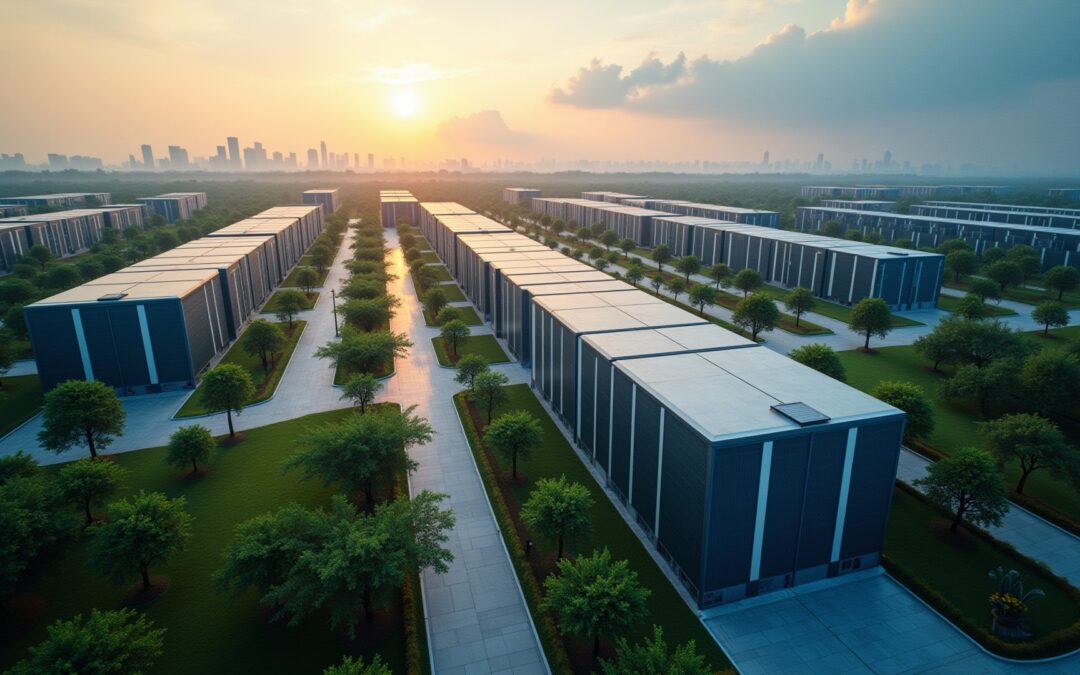
India’s real estate landscape is experiencing a strategic inflection as a leading developer steps beyond conventional asset classes to deliver the country’s largest 3 gigawatt (GW) data center park. This landmark project is emblematic of a broader pivot within the sector towards next-generation digital infrastructure assets, underlining the growing importance of high-value, tech-driven real estate in India’s evolving economy.
Traditionally dominated by residential, office, retail, and warehousing developments, the real estate industry is increasingly intersecting with India’s digital transformation, spurred by accelerating cloud adoption, IoT proliferation, and AI-driven services. Data centers, requiring specialized land parcels with robust power and connectivity, have emerged as critical infrastructural assets that support this seismic shift.
Strategic Business Implications for Developers and Investors
By committing to a 3 GW scale data center park, the developer is not only addressing a rapidly growing demand from global and domestic enterprise cloud providers but is also positioning itself at the forefront of a niche yet highly lucrative asset class. Unlike traditional commercial real estate, data centers offer long-term, resilient income streams driven by multi-year leases with technology firms and hyperscalers.
This move signals confidence in India’s digital economy trajectory and enhances investor appeal by diversifying portfolio risk away from cyclical asset classes such as offices and retail. For REITs and institutional investors, such large-scale digital infrastructure projects provide a valuable mechanism for premium portfolio diversification and capital deployment in a sector aligned with long-term structural demand.
Urban Growth, Infrastructure, and Sustainability Synergies
Data center parks are unique in their infrastructure requirements, driving upgrades in power supply, cooling technology, and renewable energy adoption. These developments are catalysts for broader urban infrastructure enhancements, particularly in suburban and peri-urban growth corridors where land availability and connectivity converge.
Additionally, these parks stimulate ancillary commercial and logistics activity, fostering economic diversification outside traditional metro cores. Their emphasis on sustainability — through efficient energy use and renewable power integration — aligns with rising demand for green buildings and climate-resilient infrastructure, adding a new dimension to urban development strategies.
Outlook: Data Centers as Pillars of India’s Real Estate Evolution
The rise of India’s largest 3 GW data center park marks a turning point that real estate leaders, investors, and policymakers must closely monitor. As digital economy applications multiply, data centers are becoming as essential as office or residential space in urban land use and economic planning, reshaping real estate demand profiles.
Developers who embrace this transition can unlock premium pricing power driven by global lease contracts, enhanced asset quality, and integration with smart, sustainable urban infrastructure. For investors, digital infrastructure offers resilience amidst traditional real estate market cycles and aligns with the broader strategic vision of India as a global digital hub.
Conclusion
This transformative project is more than a milestone; it is a strategic harbinger signalling the real estate sector’s evolution towards technology-centric assets that redefine growth, asset management, and investment paradigms across India’s urban landscapes. Industry stakeholders aiming to sustain a competitive edge must prioritize digital infrastructure in their development strategies and capital allocation to fully participate in India’s digital economy surge.