
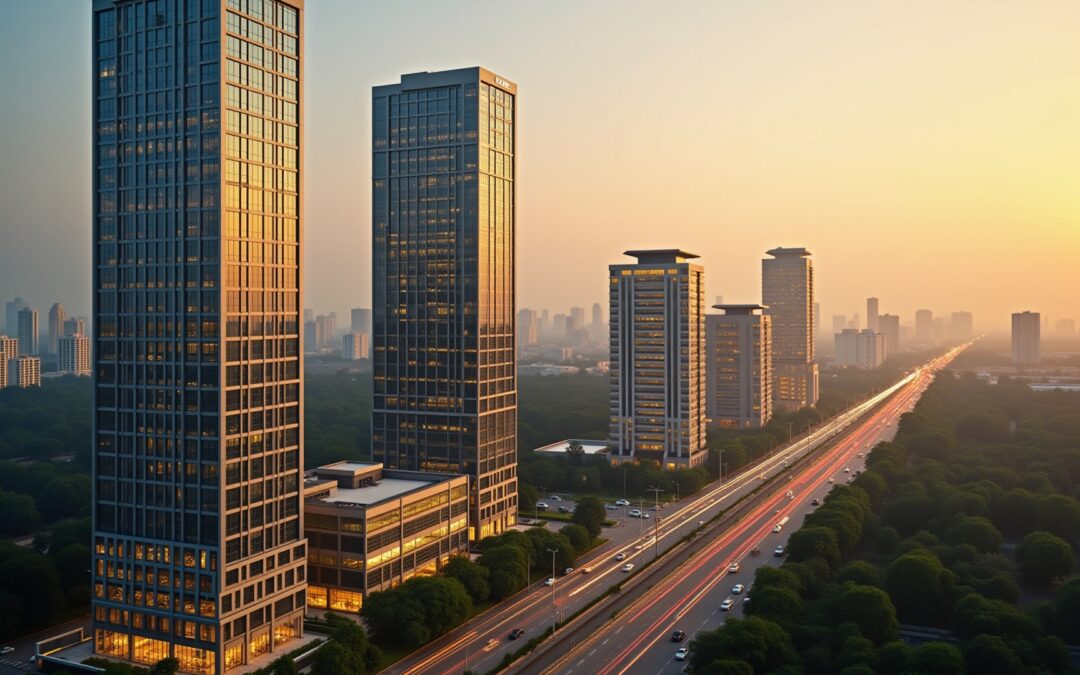
India’s commercial real estate landscape is witnessing a transformative phase, primarily driven by the expanding footprint of Global Capability Centers (GCCs). Among Indian cities, Bengaluru and Hyderabad have emerged as focal points, setting new benchmarks for Grade A office demand and strategic urban development. For industry leaders, investors, and developers, understanding these dynamics is essential to align capital deployment, asset strategy, and policy advocacy with India’s evolving commercial real estate narrative.
GCCs—largely technology, analytics, and innovation hubs established by multinational corporations—act as catalysts for high-quality office space consumption. Bengaluru and Hyderabad have become preferred destinations due to their deep talent pools, mature infrastructure, and strategic connectivity, which collectively enhance their attractiveness for enterprise-level occupiers. This sustained demand has led to robust leasing activity, premium rental growth, and superior occupancy rates, positioning these cities ahead of many Indian commercial real estate markets.
Strategic Implications for Real Estate Investors and Developers
The sustained demand from GCCs reinforces a shift towards premiumisation in commercial office real estate. Developers are increasingly tasked with delivering smart, tech-enabled environments that meet stringent sustainability certifications and support collaborative work cultures. For investors, GCCs represent a stable and creditworthy tenant segment that can anchor long-term leases, thereby reducing vacancy risks and enhancing asset yield profiles.
This trend encourages the development of office clusters and integrated commercial districts that combine office spaces with retail, hospitality, and residential offerings, creating vibrant, multifunctional ecosystems. Such clusters improve operational efficiencies and asset value, making these locations highly attractive for institutional investors and REIT participants focused on quality income-generating assets.
Urban Infrastructure and Policy Linkages Enhancing Market Fundamentals
Bengaluru’s and Hyderabad’s rise as GCC hubs is tightly linked to ongoing urban infrastructure investments—from metro rail expansions and international airport upgrades to improved road connectivity—which improve accessibility and workforce mobility. These enhancements directly support the occupier experience, a critical factor for GCCs seeking to attract and retain talent.
Moreover, the concentration of GCCs provides a unique opportunity for policymakers and urban planners to integrate smart city principles with economic development strategies. By fostering environments that balance growth with environmental sustainability and social inclusivity, these cities can cement their reputations as forward-looking commercial real estate markets.
Why This Matters for India’s Real Estate Leadership
The growing GCC presence in Bengaluru and Hyderabad exemplifies how enterprise occupier demand, urban infrastructure, and policy frameworks converge to forge competitive advantages for commercial real estate markets. In a landscape marked by increasing institutional interest and the rise of REITs, these factors collectively elevate asset quality and investment appeal.
Looking ahead, real estate leaders must anticipate the evolving needs of GCCs—from flexible workspace models to enhanced sustainability standards—to sustain growth and competitiveness. Aligning development pipelines, capital strategies, and government policy engagement will be crucial to maximizing returns and market positioning.
Ultimately, Bengaluru and Hyderabad are not only expanding India’s commercial office footprint but also shaping the broader trajectory of urban growth and real estate investment, providing a blueprint for other emerging markets across the country.
For decision-makers, this means navigating a complex but rewarding landscape where infrastructure-led demand, tenant quality, and strategic asset development coalesce to define the future of India’s commercial real estate sector.