
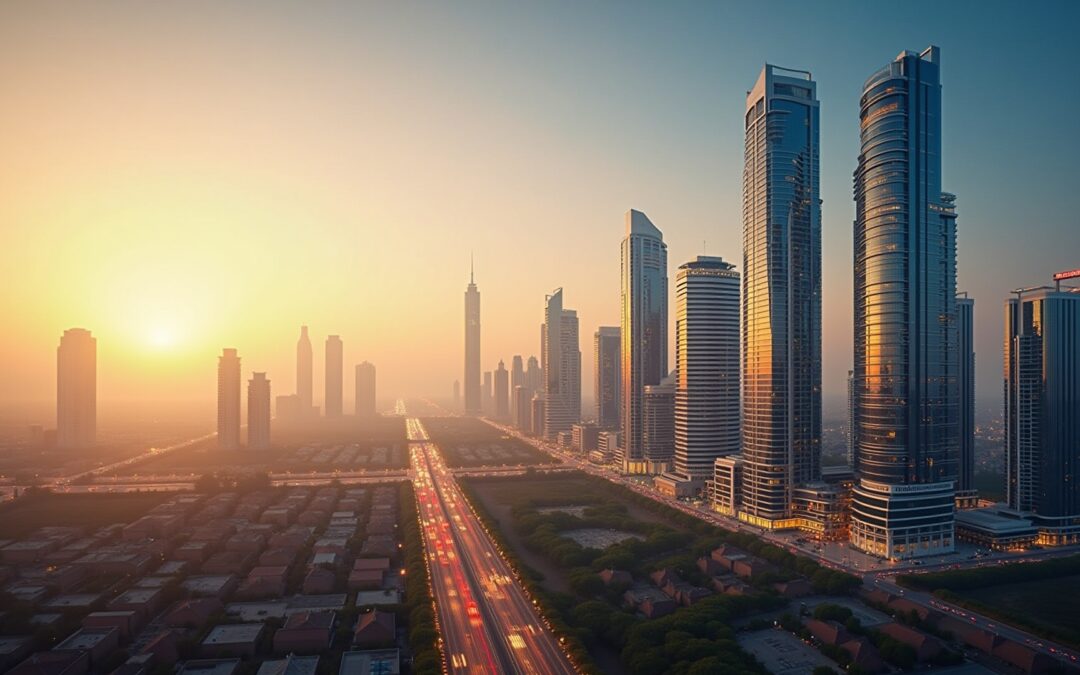
The strategic expansion of Floweret Realtech into Delhi NCR and Dubai represents a significant milestone in the evolving landscape of the India–UAE real estate investment corridor. As these two markets become increasingly interconnected, this move underscores a deeper integration fueled by international capital flows, urban growth trajectories, and a shared vision for cross-border investment facilitation.
Positioning in High-Growth Urban and Investment Hubs
Delhi NCR continues to be one of India’s most dynamic urban growth regions, attracting robust demand across residential, commercial, and mixed-use real estate segments. Infrastructure enhancements, rapid economic development, and progressive urban planning have reinforced the region’s appeal to institutional investors and end users alike. By establishing a foothold in this market, Floweret Realtech aims to leverage these growth drivers, spanning key segments such as mid-to-premium residential housing and strategically located commercial developments.
Simultaneously, Floweret Realtech’s expansion into Dubai—a global real estate and investment hub—provides direct access to mature capital markets and a sophisticated ecosystem of luxury and commercial real estate. Dubai also acts as a crucial gateway for GCC-based investment flows into India, offering diversified avenues for portfolio expansion and collaborative development initiatives. This dual market presence strategically positions Floweret Realtech at the nexus of two complementary real estate ecosystems.
Strategic Industry Implications for Developers and Investors
Floweret Realtech’s cross-border expansion highlights the increasing significance of integrated development and investment corridors between India and the UAE. For real estate developers, institutional investors, and capital market participants, this creates a compelling case for deeper collaboration and portfolio diversification. Such corridors offer pathways to tap into India’s expanding urban growth corridors and infrastructure investments, while benefiting from the capital depth and market sophistication of the UAE.
The commercial real estate sector stands to gain from this synergy, through enhanced partnerships that combine the UAE’s expertise in capital markets with India’s growth potential. This is especially relevant for luxury and mid-income residential segments in India, where GCC investor interest is rising. Retail real estate can also benefit from the strengthened capital access and cross-market learning on consumer demand evolution.
From a policy and regulatory lens, this expansion draws attention to the crucial role of supportive frameworks and bilateral cooperation. Investors and developers should closely monitor enhancements in land acquisition policies, ease of business regulations, and infrastructure connectivity—factors that will underpin sustainable growth of cross-border real estate investment flows.
Forward-Looking Outlook: Capital Flows and Urban Growth
Looking ahead, the deepening of India–UAE real estate linkages promises to elevate asset quality, innovation in development models, and institutional participation across both markets. Floweret Realtech’s expansion is emblematic of a broader institutional shift toward globalisation and strategic placement in high-potential growth corridors.
Developers and investors need to strategically evaluate emerging opportunities in satellite cities around Delhi NCR as well as other tier II and tier III markets. The cross-border corridor dynamic also calls for a nuanced understanding of housing segments—from affordable and mid-income to premium—and commercial spaces ranging from office leasing to retail assets, making the investment landscape more diversified and resilient.
Ultimately, this development reinforces India’s stature as a leading global real estate growth frontier driven by its expanding urban ecosystems, inward capital flows, and infrastructure upgrades. At the same time, the UAE’s role as a pivotal capital conduit and innovation hub will continue to shape the regional real estate market’s trajectory, fostering sustainable and mutually beneficial growth for both nations.