
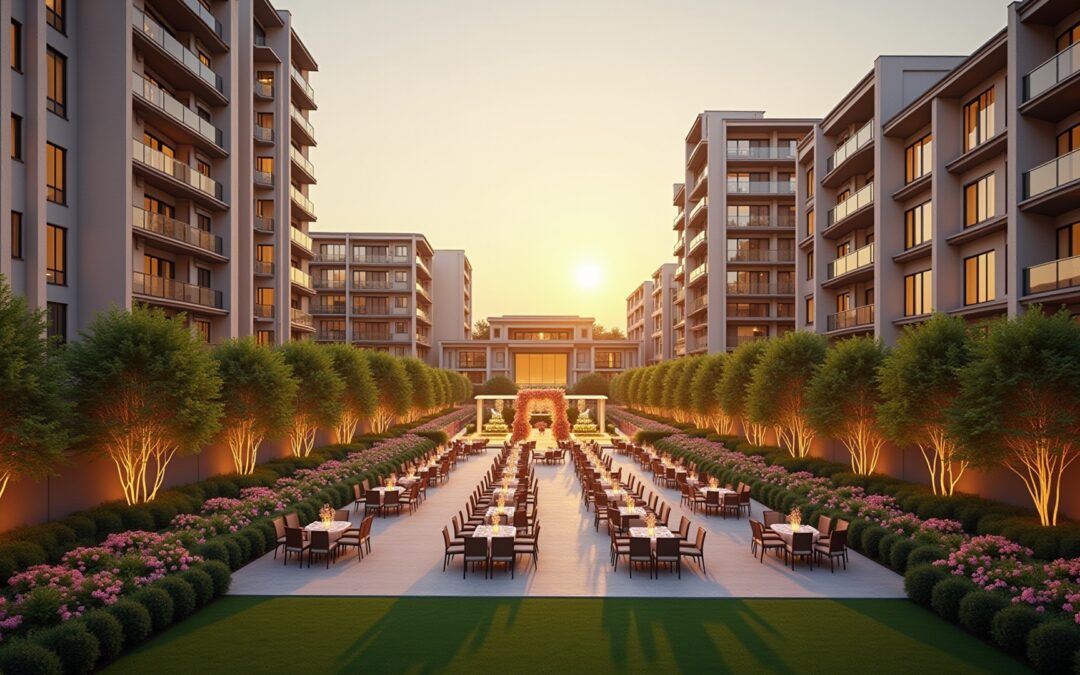
In India’s evolving real estate landscape, destination weddings have emerged as a strategic influencer shaping development and urban growth. Once confined to traditional, community-rooted ceremonies, weddings have transcended cultural customs to become drivers of premium lifestyle demand, directly impacting residential, hospitality, retail, and mixed-use real estate sectors.
This phenomenon holds significant implications for developers, investors, and urban planners who must now integrate the socio-cultural currency of destination weddings into their asset creation and city expansion models. Leveraging these emerging lifestyle preferences can unlock new growth corridors and elevate asset valuations across both primary metros and rapidly advancing Tier II and Tier III cities.
From Cultural Event to Real Estate Catalyst
Historically, wedding venues in India clustered around religious or community hubs. However, there has been a marked shift towards luxury resorts, heritage hotels, and scenic urban peripheries that offer experiential appeal. This trend dovetails with the broader premiumisation of consumer choices, emphasizing lifestyle, exclusivity, and high service standards. Developers are seizing this opportunity by aligning residential and commercial projects close to these lifestyle nodes, creating branded residences and mixed-use developments that serve both event-centric and permanent occupancy needs.
Consequently, destination wedding trends are stimulating demand for luxury hospitality inventory, thereby enhancing short-term asset monetization. More strategically, they catalyze long-term residential growth by creating desirable living environments linked to wellness, aesthetics, and enhanced connectivity.
Strategic Implications for Asset and Urban Development
For real estate leaders, the nexus between destination weddings and real estate extends beyond ceremonial venues. Urban planners and developers are confronted with the challenge of delivering bespoke infrastructure that accommodates event-driven demand, such as enhanced transport links, wellness amenities, and integrated retail environments. Such infrastructure improvements not only support wedding-related traffic but also elevate the broader livability of emerging micro-markets.
Commercial real estate sectors are also benefiting. Ancillary services including event management hubs, luxury retail outlets, and wellness centres are proliferating where destination weddings flourish. This diversification broadens investment portfolios, balancing core hospitality assets with experiential retail and branded residential offerings to enhance resilience and long-term returns.
Sustainability and Heritage: The New Norms in Destination Wedding Real Estate
In tandem with rising demand for luxury and exclusivity, there is a growing emphasis on sustainability and cultural sensitivity. Developers are increasingly adopting green building practices and engaging in adaptive reuse of heritage properties to align with regulatory frameworks and investor expectations. These sustainable developments heighten asset quality, reduce long-term operational costs, and bestow reputational advantage in a discerning market.
Unlocking New Demand Corridors and Investor Value
Destination weddings are more than episodic events; they represent shifting social patterns that influence residential absorption, hospitality asset performance, and retail demand within strategic real estate clusters. Their impact is pronounced in Tier II and Tier III cities where improving infrastructure and lifestyle amenities attract premium demand beyond traditional urban cores.
For institutional investors and REIT participants, understanding these evolving lifestyle-linked demand drivers is critical to identifying high-quality income-generating assets with strong occupancy and pricing power. Developers who integrate destination wedding dynamics into land acquisition, project design, and mixed-use programming can differentiate themselves in a competitive market driven increasingly by experiential and lifestyle values.
Conclusion: A Forward-Looking Framework for Real Estate Decision-Makers
India’s destination wedding trend is reshaping the real estate sector by redefining asset mixes, stimulating urban infrastructure upgrades, and generating differentiated demand corridors. Strategic stakeholders must recognize destination weddings as a potent catalyst for integrated real estate growth—one that intersects lifestyle trends with business imperatives.
By aligning development strategies with this socio-cultural phenomenon, real estate leaders can create assets that capture premium valuations, enhance long-term market resilience, and contribute meaningfully to urban growth narratives across India’s increasingly diverse city ecosystems. This holistic approach offers a pathway to sustainable, differentiated value in an expanding and competitive real estate market.