
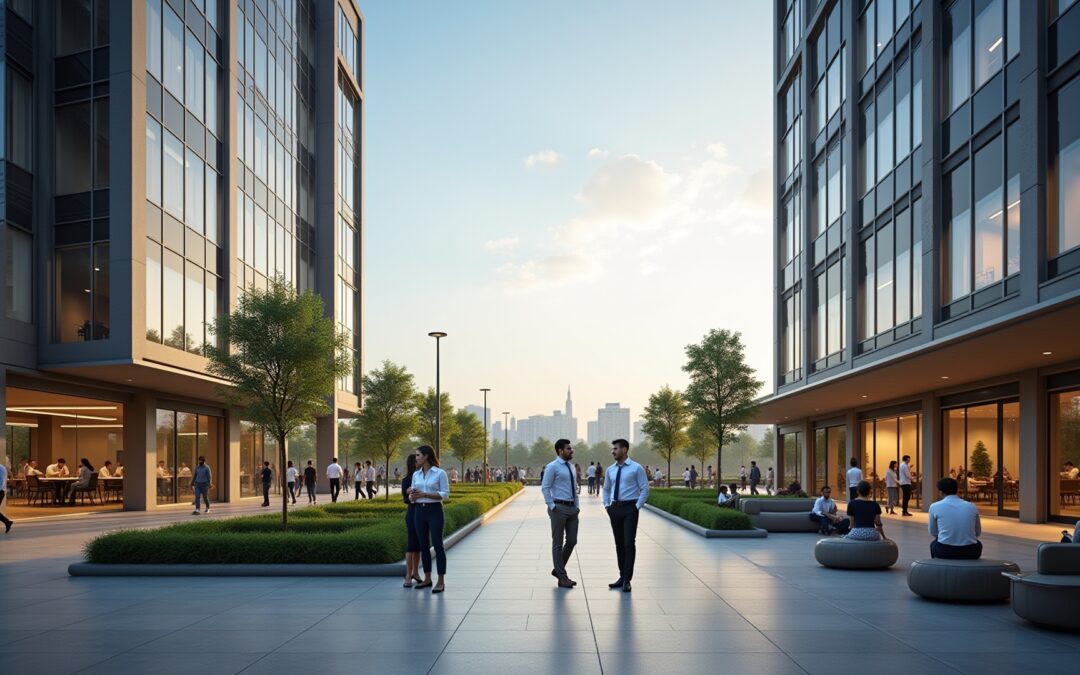
The launch of World St. by Bharti Real Estate at their flagship Worldmark development represents a strategic pivot in commercial real estate, underscoring a broader industry movement towards integrated, community-centric office environments. This evolution goes beyond conventional leasing offerings and physical infrastructure to embrace a holistic tenant experience — critical in attracting and retaining premium occupiers such as global capability centres (GCCs) and large enterprise tenants.
Worldmark has long established itself as a premier Grade A office hub, supported by India’s growing corporate sector and the steady expansion of global enterprises seeking high-quality workplaces. The introduction of World St., envisioned as the “social spine” of the commercial precinct, embeds social, wellness, and collaboration-driven spaces directly into the asset fabric. This creates an engaging atmosphere designed to meet evolving occupier preferences, which increasingly prioritize employee well-being, interaction, and urban-style amenities within workspaces.
Strategic Implications for Commercial Real Estate Development
World St. marks a deliberate shift in commercial real estate development strategies that intertwine placemaking with office leasing — a necessary evolution as demand for workspace now hinges on more than just location and facilities. Developers who incorporate dynamic social spaces can elevate tenant experience, improving employee satisfaction and productivity, which in turn supports higher occupancy and premium rents.
From an investment perspective, such integrated environments contribute to stronger asset fundamentals by reducing vacancy risk and bolstering tenant retention. Institutional and REIT investors aiming to secure stable, sustainable income streams increasingly value these experiential enhancements as they translate into resilient cash flow and long-term asset appreciation.
Interfacing Commercial Real Estate with Urban Growth and Infrastructure
World St.’s design as a connected social spine reflects a growing recognition of the interplay between commercial real estate and urban infrastructure. Developments that enhance walkability, offer lifestyle and cultural engagement, and integrate seamlessly with transportation and technology infrastructure are positioned to thrive amid urban growth trends. This synergy supports enhanced property valuations and leasing momentum, particularly in metropolitan and emerging tier II corridors.
Incorporating social and cultural elements within office precincts contributes to creating vibrant urban clusters that support the live-work-play ethos coveted by global occupiers. This underscores a matured perspective on commercial real estate that sees assets as integral components of broader urban ecosystems rather than isolated office campuses.
Implications for Industry Stakeholders
India’s real estate landscape is witnessing rapid expansion and premiumisation, with occupiers and investors alike demanding more thoughtful, integrated developments. Bharti Real Estate’s World St. sets a benchmark for future commercial office projects by showcasing how multifaceted social environments within workplaces can redefine asset competitiveness and tenant engagement.
For developers, this signals a trend towards embedding experiential design and community-building features as critical elements of office asset planning. Occupiers gain not just superior infrastructure but workplace environments that enhance collaboration, health, and employee satisfaction—factors that influence leasing decisions and organizational performance.
Investors and REIT participants stand to benefit from improved occupancy stability and rental yield enhancement, driven by higher tenant loyalty and engagement. Moreover, the integration with urban planning dynamics promises better long-term asset quality, crucial for maintaining premium valuations and capital inflows.
Looking Ahead
World St. at Worldmark exemplifies a forward-looking approach to commercial real estate development in India, marrying workplace functionality with lifestyle and urban integration. As India’s office market grows in complexity, such models will become increasingly vital to meet the diverse and sophisticated demands of global corporations and their workforce.
For strategic decision-makers, monitoring how social spine initiatives impact leasing velocity, asset valuation, and urban connectivity will be critical. Bharti Real Estate’s pioneering approach is likely to influence development standards and investment frameworks across India’s high-growth commercial real estate markets, setting a precedent for integrated, sustainable, and experience-driven office ecosystems.