
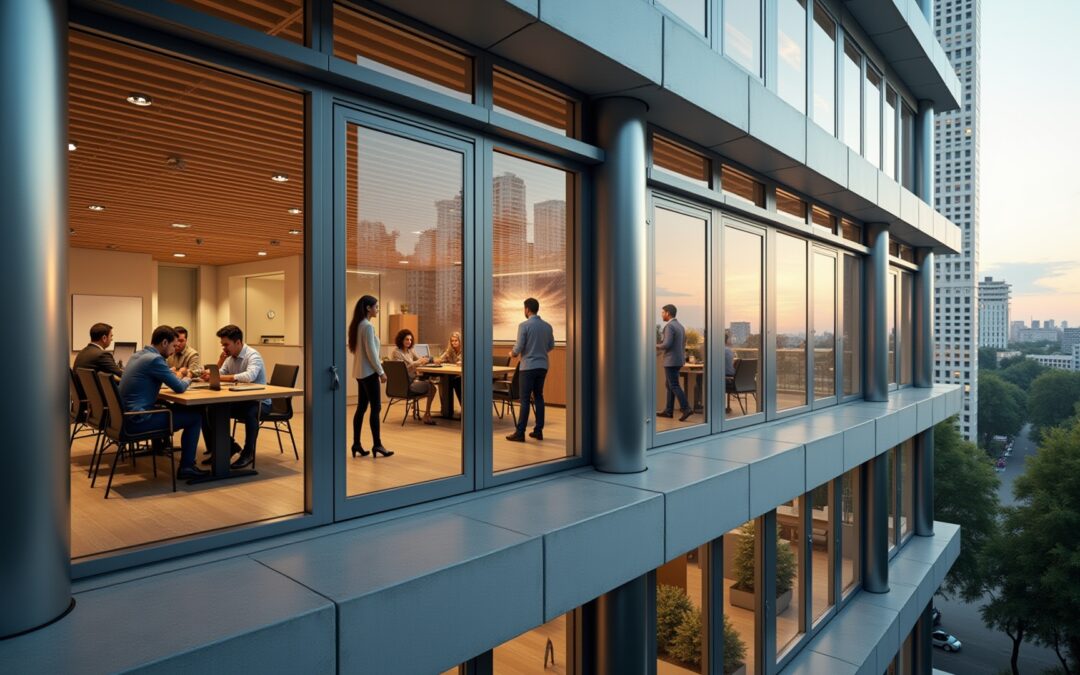
The Indian commercial real estate sector is experiencing a strategic transformation driven by a powerful and sustained rise in demand for flexible workspaces. Spearheaded by large corporate occupiers, this shift is more than a transient response to pandemic-era disruptions; it reflects a fundamental change in how corporations manage their real estate portfolios to align with evolving workforce expectations and operational agility.
The Corporate Imperative Behind Flex Workspace Growth
Large corporations in India are rapidly adopting flexible office solutions to enhance their operational flexibility, optimize cost structures, and better accommodate hybrid working models. This trend reflects a broader recalibration of corporate real estate strategies, where firms seek scalable, technology-enabled environments that support workforce mobility without the constraints of traditional long-term leases.
Flex workspaces now form a critical element of office portfolios across India’s primary metros as well as the increasingly important tier II and III cities. The appeal lies not only in their adaptability but also in their capacity to offer premium amenities and digital infrastructure that meet modern enterprise requirements.
Strategic Impact on Real Estate Development and Investment
For real estate developers and landlords, responding to this corporate-driven demand necessitates a paradigm shift in asset composition. Incorporating flexible workspace offerings allows property owners to diversify revenue streams, increase occupancy rates, and improve asset liquidity in a market where conventional office leasing faces growing competition from agile workspace solutions.
Investment stakeholders, including REITs and institutional funds, must recognize that flex spaces contribute positively to rental yields by commanding premium pricing for services and agility. This evolution aligns with digital transformation and hybrid work trends, positioning flexible office assets as resilient income-generating vehicles within diversified real estate portfolios.
Influence on Urban Growth, Infrastructure, and Policy
The growth of flexible workspaces is intricately linked to broader urban development trajectories. As corporates extend their footprint beyond saturated metro cores into emerging tier II and III cities, infrastructure upgrades become essential to unlocking these new markets. Well-planned urban infrastructure enhances accessibility, making flex offices viable hubs for decentralized economic activity.
Urban planners and policymakers must integrate these insights into city growth and real estate regulatory frameworks. Flexible offices support dynamic business ecosystems that foster workforce mobility and reduce congestion pressure in prime commercial districts, thereby contributing to more balanced and sustainable urban environments.
Future Outlook: Flex Workspaces as a Cornerstone of India’s Commercial Real Estate Landscape
The enduring adoption of flex workspaces by large corporates signals a long-term restructuring of India’s office real estate market fundamentals. Developers who innovate and embed flexibility into their asset strategies will differentiate themselves, attracting premium corporate clients and enhancing asset resilience.
Investors aligned with this trend will find opportunities in high-quality, technology-driven workspace assets that anticipate evolving occupier demands and hybrid work models. Meanwhile, urban development stakeholders have a pivotal role in fostering the infrastructure and policy ecosystems that support this commercially strategic evolution.
Ultimately, the flex workspace boom is not just reshaping office leasing but redefining competitive dynamics across India’s commercial real estate sector. As this trend matures into a mainstream business model, it will drive innovation, urban decentralization, and sustainable sector growth — themes crucial for real estate leaders, investors, developers, and policymakers navigating the future of India’s built environment.