
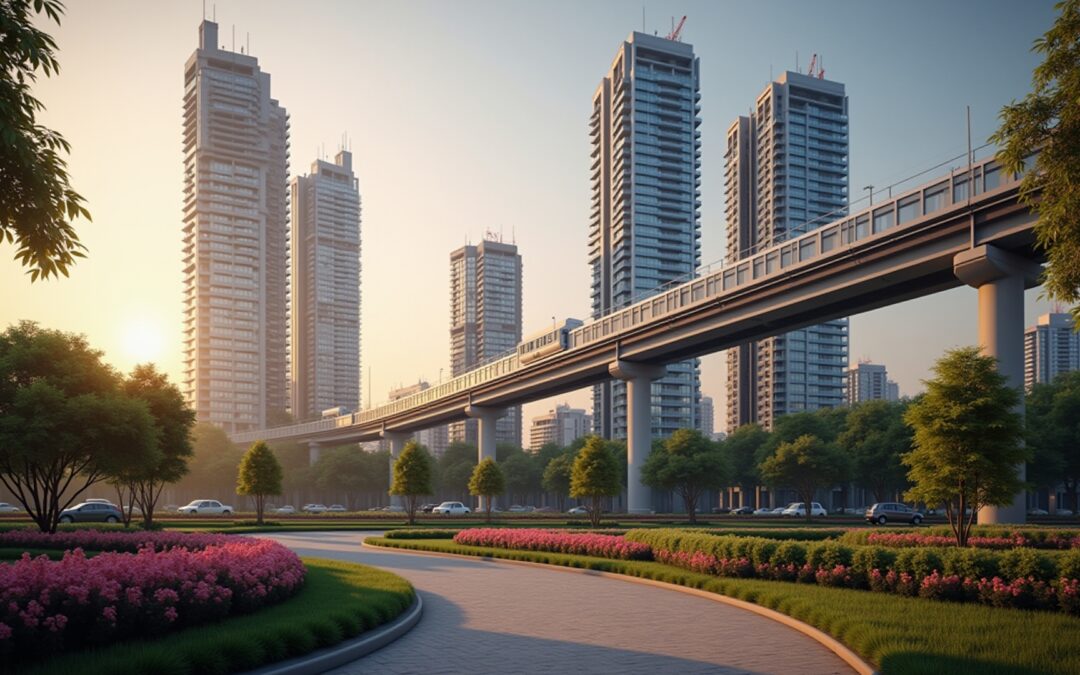
Over the last thirty years, India’s real estate sector has evolved from a fragmented market landscape into an increasingly sophisticated and strategically vital component of the nation’s economic expansion and urban development. This transformation—marked by policy reform, infrastructure investment, shifting capital flows, and emergent asset classes—is redefining how developers, investors, and urban planners navigate growth in residential, commercial, and industrial segments.
For industry leaders and decision-makers, understanding the trajectory of this evolution offers critical insights into asset quality, location strategy, market segmentation, and investment underwriting against a complex backdrop of pan-India urbanisation and economic diversification.
Urban Expansion and Market Deepening Beyond Metro Cores
India’s real estate growth narrative is no longer confined to metros alone. The last three decades have seen substantial development ripple into tier II and tier III cities, led by improved infrastructure connectivity, evolving occupational patterns, and a growing middle-income population demanding quality housing. This geographic dispersion calls for refined strategies around land acquisition, affordability metrics, and local market dynamics that balance scale with sustainable occupancy.
Residential development across these emerging corridors increasingly blends mid-income and affordable housing solutions with premiumisation trends seen in larger urban centers. Developers now face the dual mandate of meeting affordability-driven demand while creating long-term asset value and liveability—an imperative supported by government initiatives targeting affordable housing and slum rehabilitation.
Commercial Real Estate and the Rise of Grade A Office Spaces
The commercial realty sector has been propelled by the exceptional growth of Global Capability Centres (GCCs) and enterprise occupiers prioritizing high-quality, Grade A office environments. This has driven a sustained demand for premium office leasing stock, necessitating a focus on building resilience into asset design, flexible leasing models, and technology integration to meet evolving occupier expectations.
Institutional capital flows, including REIT participation, have further heightened the need for transparency, yield stability, and asset management rigour. For developers and investors, this represents both an opportunity and a challenge: to optimise asset operational efficiency while embracing digital transformation and sustainability benchmarks to preserve value amid rising market competition.
Emergence of Warehousing, Logistics Parks, and Digital Economy Assets
Parallel to traditional real estate segments, warehousing, logistics parks, and data centers have emerged as critical pillars of India’s real estate ecosystem. These asset classes are aligned closely with the country’s broader economic shifts—e-commerce expansion, supply chain optimisation, and digital economy growth—necessitating new development frameworks for strategic location, technological infrastructure, and regulatory compliance.
Investment in these sectors reflects changing consumption and enterprise trends, with institutional investors increasingly recognising their potential for stable returns and portfolio diversification. This trend underscores a broader repositioning of Indian real estate towards integrated, multi-asset strategies anchored in long-term macroeconomic and urban growth fundamentals.
Policy, Regulatory Reforms, and Urban Infrastructure Synergy
The role of government policy and urban infrastructure investment has been fundamental in shaping this three-decade evolution. Regulatory frameworks have progressively introduced clarity and efficiencies around land acquisition and approvals, helping reduce historical bottlenecks. Simultaneously, initiatives around green building certifications, affordable housing mandates, and slum rehabilitation reflect a convergence of real estate development with social and environmental sustainability objectives.
This evolving regulatory landscape demands strategic agility from real estate leaders who must balance growth ambitions with compliance, long-term asset resilience, and community impacts. Investment in data-led, sustainable development practices is becoming a business imperative rather than a peripheral consideration.
Strategic Priorities for Industry Leaders Looking Ahead
As India’s real estate sector continues its trajectory of robust expansion, the emphasis on quality, resilience, and strategic innovation will intensify. Developers, investors, and occupiers need to anticipate shifting market dynamics shaped by evolving occupier profiles, institutional capital expectations, and regulatory frameworks.
Growth corridors in tier II and III cities, underpinned by improving urban infrastructure and connectivity, present a fertile ground for expansion, demanding tailored development approaches that blend affordability, asset quality, and technology adoption. Integrating proptech solutions, sustainability metrics, and advanced data analytics will be essential for maintaining competitiveness and unlocking asset value in this complex environment.
Ultimately, the Indian real estate journey over the past thirty years reflects more than vertical urban expansion; it encapsulates the creation of scalable, sustainable ecosystems aligned with broader economic and societal imperatives. Leaders equipped with this historical insight and strategic foresight will be best positioned to drive the sector’s next phase of value-driven growth and transformation.