
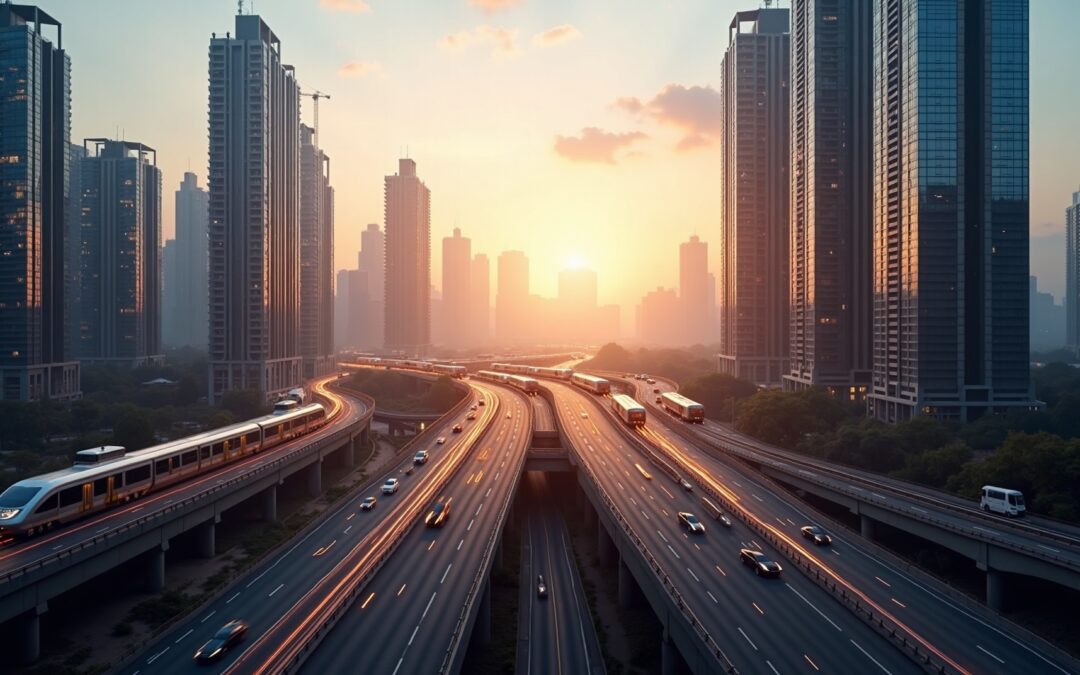
India’s infrastructure sector is entering a pivotal phase that promises to reshape the real estate landscape in profound ways. This transformative wave goes beyond mere improvements in connectivity—it is setting the stage for a sustained wealth cycle that will redefine urban growth corridors, asset valuations, and investment flows across residential, commercial, and industrial real estate markets. For developers, investors, and urban planners, understanding this nexus between infrastructure and real estate is essential to unlocking unparalleled strategic advantage in the coming decade.
Infrastructure as a Catalyst for Geographic Diversification and Market Expansion
The ongoing acceleration of infrastructure projects led by government initiatives—spanning roads, highways, metro networks, logistics hubs, and digital infrastructure—is shifting real estate demand dynamics beyond India’s traditional metropolitan centers. Improved transport and supply chain linkages reduce market friction, enabling real estate developers and investors to explore tier II and tier III cities with renewed confidence.
This geographic diversification is critical from both a market and capital perspective. Saturation and affordability pressures in primary markets have made it imperative for institutional and REIT investors to seek high-quality assets in emerging urban nodes. Infrastructure expansions facilitate this by enhancing accessibility and operational efficiency, directly supporting the growth of warehousing, logistics parks, and industrial estates in these regions. The rise of robust supply chains and new economic nodes in secondary cities illustrates the widening investment horizon and the need for strategic land acquisition and development plans aligned with these corridors.
Residential Real Estate: Unlocking Value in Affordable and Mid-Income Segments
The impact of infrastructure development is equally pronounced in India’s residential market, particularly within affordable and mid-income housing. Enhanced urban connectivity—through improved roads, metro access, and transit-oriented developments—broadens the effective catchment area of job centers and economic hubs. This improved accessibility boosts demand for residential projects in previously underserved locations, encouraging the emergence of new townships and residential clusters.
For developers and housing financiers, this signals a strategic inflection point to recalibrate project pipelines and marketing strategies. Capturing the aspirations of India’s growing urban middle class requires aligning housing development with infrastructure-driven growth corridors, ensuring efficient commute times and access to essential urban amenities.
Commercial Real Estate and Occupier Dynamics: The GCC Factor
Grade A office real estate is another sector where infrastructure development is proving decisive. Global Capability Centers (GCCs) and enterprise occupiers prioritize locations with superior connectivity, talent accessibility, and an ecosystem conducive to productivity and innovation. Infrastructure investments improve asset competitiveness by reducing commuting challenges and creating integrated business hubs that appeal to these occupiers.
This elevated demand environment bolsters occupancy rates and rental growth, boosting pricing power for developers and asset owners. Consequently, office leasing strategies and project developments are increasingly tailored to leverage infrastructure advantages, reinforcing the symbiotic relationship between urban mobility and commercial real estate success.
Capital Markets: Infrastructure-Linked Real Estate as a Core Investment Theme
The confluence of infrastructure and real estate growth is enhancing asset quality and offering more attractive yield profiles, which is drawing heightened attention from institutional investors and REIT participants. The confidence engendered by infrastructure connectivity underpins a virtuous circle of capital flows, enabling larger-scale mergers, portfolio expansions, and the rollout of development pipelines focused on newly emerging corridors.
For capital allocators, recognizing infrastructure-led growth corridors as premium investment avenues is vital. It supports portfolio diversification away from saturated metros towards high-growth potential nodes backed by fundamental demand drivers.
Urban Growth and Sustainability: Integrating Infrastructure with Future-Ready Development
From an urban planning and sustainability standpoint, infrastructure investment offers a unique opportunity to embed resilience and green building principles into real estate development. The alignment of transport-oriented development, smart city frameworks, and sustainable construction practices is essential to create assets that are not only competitive but also compliant with evolving regulatory standards and environmental imperatives.
Long-term asset quality and regulatory alignment will increasingly influence investor decisions, making sustainability integration indispensable for market leadership in India’s next real estate growth cycle.
Conclusion: Strategic Imperatives for Real Estate Leaders
India’s real estate ecosystem stands at a strategic crossroads as infrastructure development emerges as the cornerstone of the next wealth cycle. Real estate leaders must proactively align development strategies, investment decisions, and operational efficiencies with this evolving infrastructure map to capture emerging corridor opportunities.
Success will depend on leveraging infrastructure-driven demand segmentation—across warehousing, residential affordability, Grade A office leasing, and integrated commercial-residential townships—while emphasizing asset quality, tenant needs, and sustainability. These elements combined will define the real estate industry’s trajectory in India, driving resilient growth, higher returns, and broad-based urban transformation through the decade ahead.