
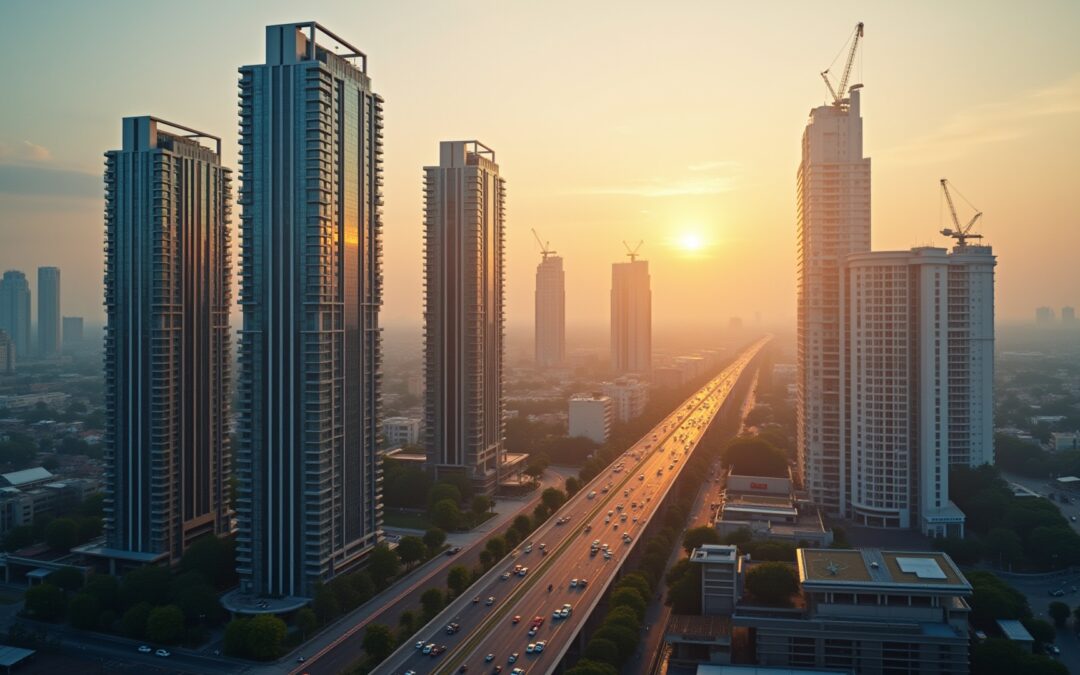
India’s real estate industry is at a pivotal juncture. As the sector continues to experience robust expansion, a nuanced understanding of the country’s leading real estate markets is crucial for developers, investors, urban planners, and industry stakeholders. The delineation of the top 10 real estate markets driving growth in 2026 reveals not only geographic hotspots but dynamic and integrative ecosystems where residential absorption, commercial leasing, and infrastructure development converge to create sustainable long-term value.
These markets represent a microcosm of broader shifts reshaping India’s property landscape. They encompass a mix of traditional metropolitan hubs and rapidly maturing tier II and tier III cities, each characterized by expanding housing demand across multiple segments—ranging from affordable and mid-income to luxury residences. This diversification signals growing enfranchisement of varying income groups, reflecting deepening urbanisation along with evolving market sophistication.
Commercial real estate demand is equally transformative in these regions, propelled by the sustained appetite for premium Grade A office spaces, particularly driven by Global Capability Centres (GCCs) and enterprise occupiers. Meanwhile, retail precincts and logistics parks are becoming intrinsic parts of these urban ecosystems, underpinned by increasing investment in warehousing and data centre infrastructure aligned with India’s digital economy growth trajectory.
Institutional Investment and Market Resilience
Institutional participation, particularly from REITs and other capital market vehicles, underscores the investment-grade quality of these markets. Their demonstrated pricing power and resilient occupancy levels attract large-scale capital seeking stable income streams and asset appreciation. This trend is critical as the sector evolves beyond transactional volumes to value-driven, sustainable growth models emphasizing long-term asset quality and returns.
The Shift Beyond Metro Cores: Tier II and III Take Center Stage
The top real estate markets of 2026 reflect a tectonic shift in urban growth models. Enhanced urban infrastructure, improved connectivity corridors, and strategic land acquisition initiatives are enabling tier II and tier III cities to emerge as formidable real estate hubs. These secondary cities are capturing expanding demand beyond the traditional megacities, buoyed by policy support, digital economy requirements, and growing affordability.
This geographic diversification not only mitigates concentration risks but also aligns with national urbanisation imperatives focused on balanced regional development. For developers and investors, these markets offer a compelling blend of growth potential and evolving commercial ecosystems conducive to scalable, profitable ventures.
Proptech and Sustainability as Strategic Enablers
Success in these top markets will increasingly depend on integrating proptech innovations and sustainability practices. Data-driven development decisions enabled by proptech foster precision in demand forecasting, asset management, and customer engagement. Concurrently, embedding green building standards and sustainability benchmarks enhances asset competitiveness and regulatory compliance, meeting the expectations of a more environmentally conscious occupier base.
What It Means for Stakeholders
For real estate executives, investors, and urban planners, these identified markets provide fertile ground for strategic expansion. They present opportunities to leverage evolving market dynamics—balancing residential affordability with commercial rental growth, aligning infrastructure upgrades with asset development, and integrating sustainable practices to future-proof portfolios.
Looking forward to 2026, the ability to navigate the complex interplay of these factors will distinguish market leaders. Developers who adopt a multi-sector approach, investors who prioritize institutional-grade assets with enduring appeal, and policymakers who enable integrative urban models will collectively shape India’s vibrant real estate ecosystem.
Conclusion: Strategic Imperatives for Growth and Leadership
India’s top 10 real estate markets will not just represent areas of demand concentration; they embody the evolution of the sector’s strategic priorities. Understanding the unique drivers in each market empowers stakeholders to mitigate risks, identify profitable ventures, and contribute to India’s urban transformation journey. This approach will define the future contours of property development, capital flow, and infrastructure modernization, sustaining India’s position as a promising frontier in global real estate.