
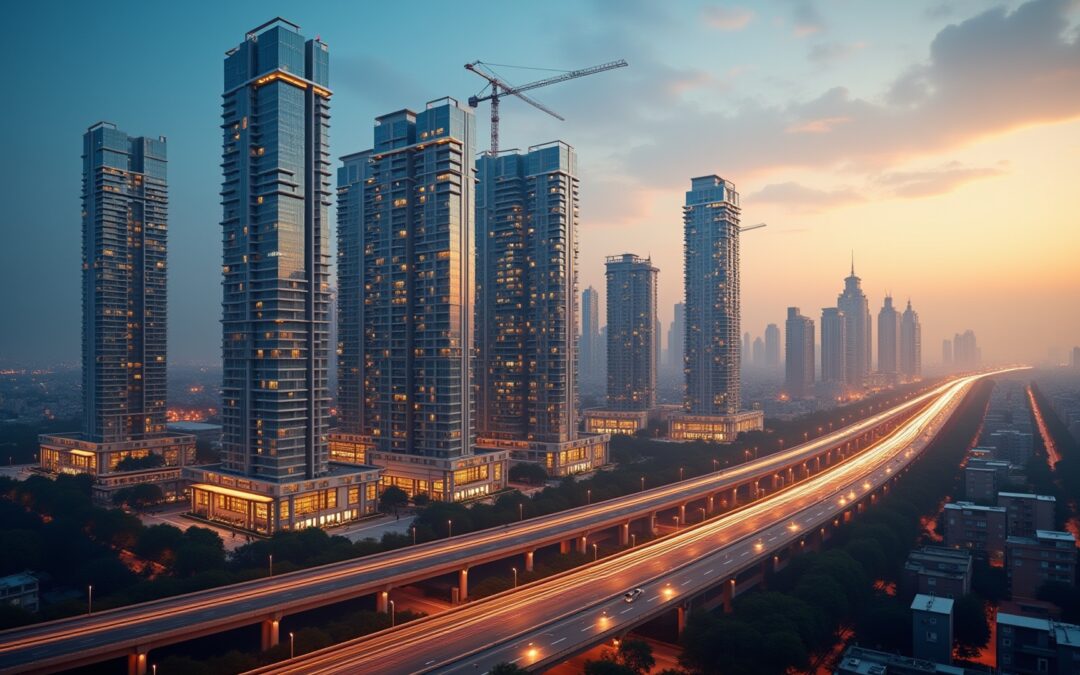
India’s real estate sector stands at a transformative crossroads, shaped by dynamic shifts in market demands, regulatory frameworks, and urban infrastructure developments. For developers and investors, reimagining growth and operational strategies is no longer optional but imperative to navigate this evolving landscape and unlock sustainable value.
As India transitions beyond traditional metro-centric growth, tier II and tier III cities are emerging as critical growth corridors. This decentralisation, coupled with rising institutional interest and evolving consumer preferences, is reshaping both residential and commercial real estate sectors in ways that demand strategic recalibration.
Differentiated Residential Demand and the Rise of Mid-Income Housing
The residential market in India is experiencing nuanced demand patterns. While premium housing continues to attract affluent buyers, the surge in mid-income and affordable housing segments plays a pivotal role in overall market absorption. Developers focusing on this balanced product mix can better align with demographic shifts and affordability dynamics, enhancing sales velocity and long-term viability.
This diversification calls for developers to adopt flexible, market-responsive models that consider not only evolving buyer aspirations but also infrastructural connectivity and urban growth patterns. Townships and satellite city projects in emerging urban corridors become increasingly attractive as government policies and infrastructure investments improve accessibility and livability.
Robust Grade A Office Demand Driven by GCCs and Enterprise Occupiers
On the commercial front, demand for Grade A office spaces remains resilient, buoyed particularly by Global Capability Centres (GCCs) and enterprise occupiers. These segments are driving a sustained need for premium office real estate, further catalysed by evolving workplace models emphasizing flexibility and high-quality amenities.
Institutional investors are paying close attention to these trends, recognising the value of income-generating assets that benefit from high occupancy and strong leasing interest. For developers, integrating technology and data-driven insights—including through proptech solutions—can enhance asset management and operational efficiency, providing a competitive edge in attracting tenants and capital.
Infrastructure and Sustainability: Defining Competitive Advantage
Improvements in urban infrastructure – from enhanced connectivity via transport networks to upgraded utilities – are unlocking new opportunities in tier II and III cities. These developments not only increase asset desirability but also catalyse growth in logistics hubs, townships, and mixed-use developments.
Simultaneously, sustainability and green building mandates are increasingly influencing real estate decisions. Projects that prioritise environmental responsibility and comply with regulatory frameworks tend to attract premium valuations and appeal to capital providers focused on ESG (Environmental, Social, and Governance) criteria. This sustainability focus contributes to long-term asset quality and operational cost efficiencies, underpinning competitive differentiation.
Leadership Agility and Strategic Capital Deployment
In an environment characterised by regulatory changes and market volatility, leadership agility becomes a cornerstone for success. Developers and institutional investors must refine land acquisition strategies to target high-potential locations aligned with urbanisation trends. They also need to embrace digital tools and data analytics to improve operational efficiencies and portfolio management.
REITs (Real Estate Investment Trusts) present an evolving avenue for capital deployment, allowing both developers and investors to monetise assets while participating in ongoing growth. The focus is increasingly on well-located, income-generating assets that offer stable returns and resilience against market fluctuations.
Conclusion: Strategic Reimagining as a Growth Imperative
Reimagining India’s real estate landscape is fundamentally a strategic imperative rather than a conceptual exercise. By leveraging data-informed decision-making, focusing on sustainability, and capitalising on emerging urban growth corridors, industry leaders can position themselves for sustainable, long-term success.
For developers and investors, the message is clear: adapt to the shifting residential and commercial realities, harness infrastructure and sustainability as competitive levers, and deploy capital with precision amid evolving market dynamics. These strategies will not only deliver superior asset performance but also support India’s broader urban and economic development trajectories.