
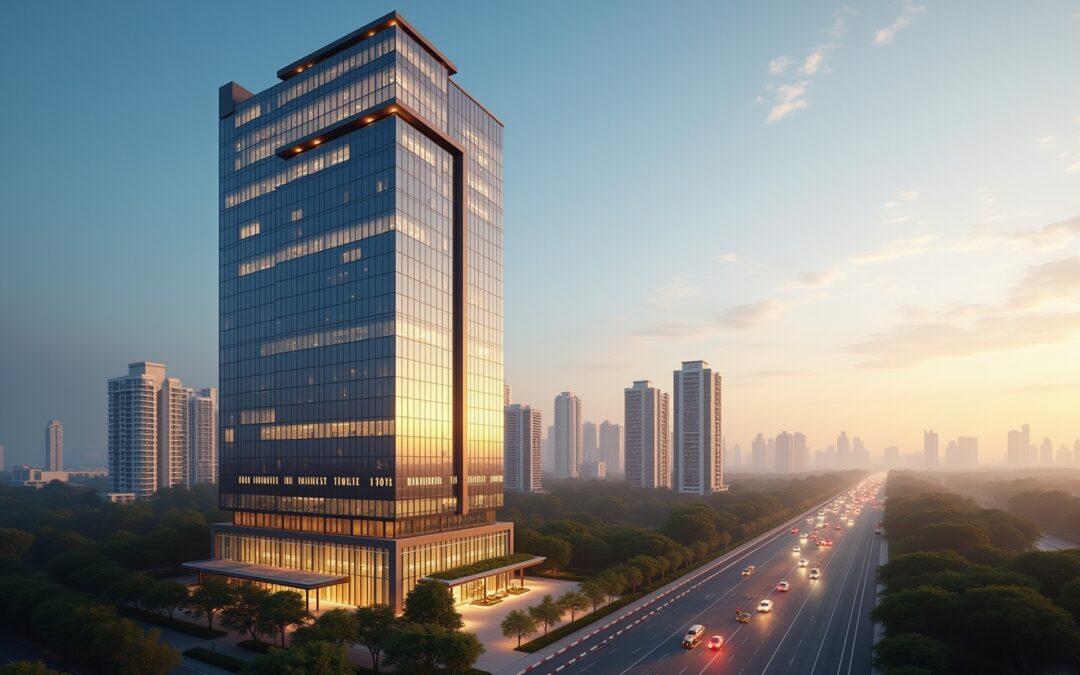
BP Business Solutions India Pvt Ltd’s recent leasing of 10.4 lakh square feet of Grade A office space in Pune—with a total rent commitment exceeding ₹1,258 crore over a decade—marks a significant milestone in India’s evolving commercial real estate landscape. Beyond the sheer scale and financial magnitude, this strategic lease underscores Pune’s emergence as a formidable office market, reflecting broader shifts in occupier preferences, investor confidence, and urban growth trajectories outside of traditional metros.
Pune’s Ascendancy in India’s Commercial Real Estate Matrix
Historically overshadowed by Mumbai and Bengaluru, Pune is rapidly consolidating its position as a preferred destination for Global Capability Centers (GCCs) and technology firms. This recent high-value leasing deal acts as a bellwether to Pune’s growing appeal driven by a confluence of factors: competitive pricing relative to older metro hubs, an enriched Grade A office supply pipeline, enhanced urban infrastructure, and improved connectivity. The transaction highlights an increasing confidence in Pune’s mature ecosystems that are attractive for large-scale, long-term office occupiers.
Strategic Implications for Developers and Investors
For developers, the willingness of a marquee tenant like BP Business Solutions India to commit to such a significant footprint and long lease tenure signals burgeoning pricing power for premium office assets in Tier II cities. This lease not only validates the viability of large-scale Grade A office projects outside metro cores but also encourages innovation around flexible, scalable office designs that accommodate the evolving needs of GCCs and tech enterprises.
Institutional investors and REITs can glean from this deal that tier-II office markets like Pune are ripe for absorption of high-quality office spaces, with the potential for delivering stable, long-term rental yields. The deal further positions Pune as a preferred market for institutional-grade investments, reinforcing the need for capital deployment beyond the heavily saturated metros. This may usher in broader geographic diversification in portfolios seeking exposure to India’s commercial office segment.
Urban Infrastructure and Policy: Critical Enablers
This leasing decision also underlines the critical role of urban infrastructure and policy frameworks. Pune’s improved road networks, metro connectivity projects, and supportive municipal policies have enhanced its attractiveness as a business destination. Policymakers and urban planners must continue to prioritize infrastructural upgrades and incentives that nurture such growth hubs, ensuring sustained momentum for commercial real estate expansion in emerging cities.
What This Means for Occupiers and Urban Growth
- Occupiers: Benefit from access to cost-effective, high-quality office spaces aligned with long-term business growth strategies, avoiding the escalating costs and supply crunch in established metros.
- Urban Development: Pune’s rise exemplifies the broader trend of economic decentralization, promoting balanced urban growth that alleviates pressure on primary metro regions while catalyzing infrastructure and realty development in Tier II cities.
Conclusion: Aligning Strategies with Emerging Real Estate Dynamics
BP Business Solutions India’s decisive leasing move in Pune encapsulates key real estate trends shaping India’s commercial property market: geographic diversification, premiumisation of office assets, and increased institutional involvement in emerging growth corridors. For developers, investors, and policymakers alike, this represents a clarion call to intensify focus on tier-II cities with strong urban fundamentals.
Strategic alignment with these evolving dynamics—anchored in asset quality, infrastructural readiness, and enterprise demand profiles—will be vital to unlock sustainable growth, competitive pricing power, and enhanced long-term value creation within India’s commercial real estate ecosystem.