
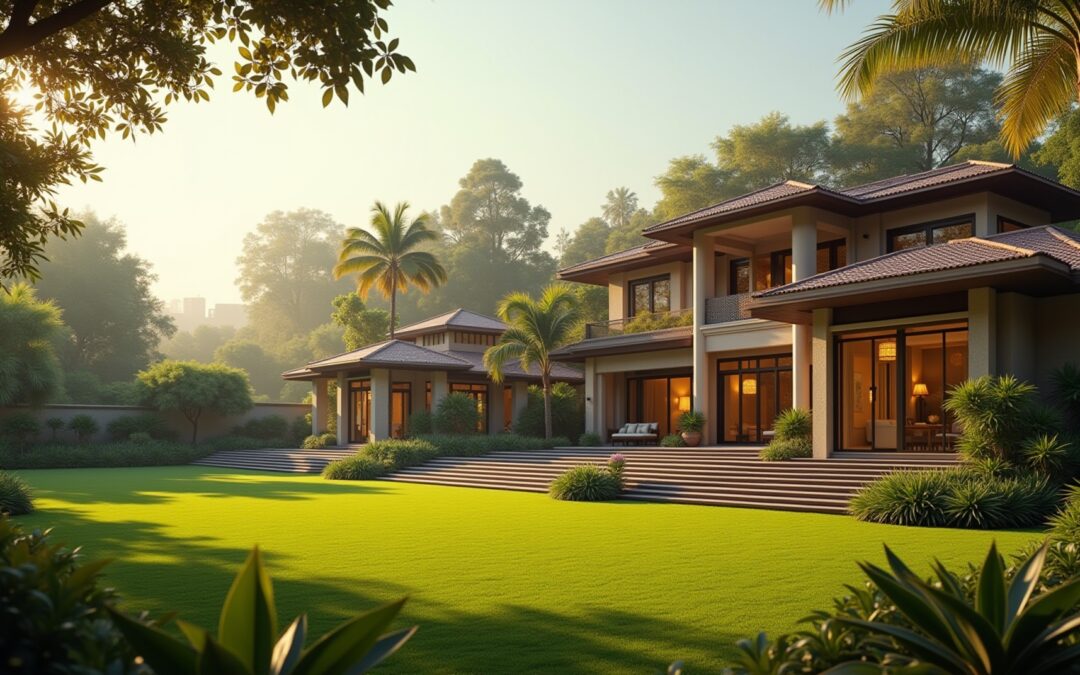
The trend of Indian cricket stars investing in luxury farmhouses across India’s most coveted locales is more than a showcase of personal wealth—it offers crucial insight into evolving patterns within the high-end residential real estate market. For developers, investors, and urban planners, this phenomenon reflects a broader strategic realignment where exclusivity, lifestyle, and connectivity converge to redefine luxury housing preferences among India’s affluent population.
A Marker of Premiumisation and Market Diversification
Luxury farmhouses owned by prominent Indian cricketers underscore a growing segment of the residential ecosystem focused on expansive, private estates that merge rural tranquility with premium amenities. This shift signals continued premiumisation beyond conventional urban apartments and villas, highlighting demand for differentiated housing products that offer privacy, space, and sophisticated infrastructure.
For developers, this niche but rapidly appreciating asset class presents opportunities for bespoke project designs targeting ultra-high-net-worth individuals (UHNIs) who prioritize exclusivity and lifestyle quality. These farmhouses encapsulate aspirations for secure, serene living environments that remain accessible to city centers, facilitating a hybrid lifestyle that blends work, leisure, and social prestige.
Investment and Institutional Appeal
From an investor and institutional capital standpoint, luxury farmhouses offer interesting avenues for creating income-generating assets within niche luxury residential portfolios. Opportunities arise to integrate these properties into luxury hospitality ventures, exclusive membership models, and premium leased residencies tailored for corporate leaders, global expatriates, and elite clientele. This diversification complements the growing institutional appetite for differentiated real estate products with intrinsic lifestyle appeal.
Infrastructure Connectivity Fuelling Demand
The prominence of these farmhouses in India’s premier locations aligns with improving infrastructural linkages that make semi-urban and peri-urban luxury residential development increasingly viable and attractive. Enhanced highways, proximity to private aviation hubs, and smart infrastructure initiatives are critical enablers, ensuring that exclusive rural living does not come at the cost of accessibility.
This evolving connectivity framework offers strategic benefits for urban planners and developers balancing India’s rapid urbanisation with sustainable growth. By supporting residential shifts into tier II and III cities and peri-urban corridors, these trends help mitigate pressure on metropolitan centers and promote decentralised, quality housing ecosystems.
Strategic Implications for Developers and Urban Growth Stakeholders
Understanding the demand for luxury farmhouses driven by high-profile buyers such as Indian cricket stars offers several strategic takeaways. There is a clear imperative for developers to recalibrate their product offerings, integrating larger land parcels with premium infrastructure tailored to exclusivity and lifestyle sophistication.
This trend also emphasizes the importance of comprehensive marketing and positioning strategies that appeal to discerning buyers seeking privacy, environmental quality, and status. Strategic land acquisition in peri-urban and growth corridors with robust infrastructure support will be central to capturing this affluent segment.
Broader Urban and Market Impact
The rising preference for luxury farmhouses reflects a nuanced market evolution where asset segmentation drives sector growth. It spotlights the interplay between real estate, infrastructure, and urban policy, underscoring the need for integrated development frameworks that accommodate diverse housing typologies.
Furthermore, by strengthening residential offerings beyond congested urban cores, the farmhouse trend enhances India’s long-term housing supply stability while supporting sustainable urban expansion. These dynamics will likely attract greater institutional participation, further professionalizing premium residential asset management.
Conclusion
Luxury farmhouse ownership among India’s cricket elite encapsulates strategic real estate trends that extend beyond celebrity status into meaningful market drivers. For stakeholders across development, investment, and urban planning spheres, this niche segment exemplifies evolving luxury demand marked by exclusivity, connectivity, and sophisticated lifestyle needs.
Capitalizing on this segment requires forward-looking approaches that meld premium rural living with robust infrastructure and strategic land positioning. As India’s residential real estate landscape continues to mature, luxury farmhouses stand out as a compelling asset class with significant growth potential, aligning with broader urban growth and capital market trends shaping the country’s property industry.