
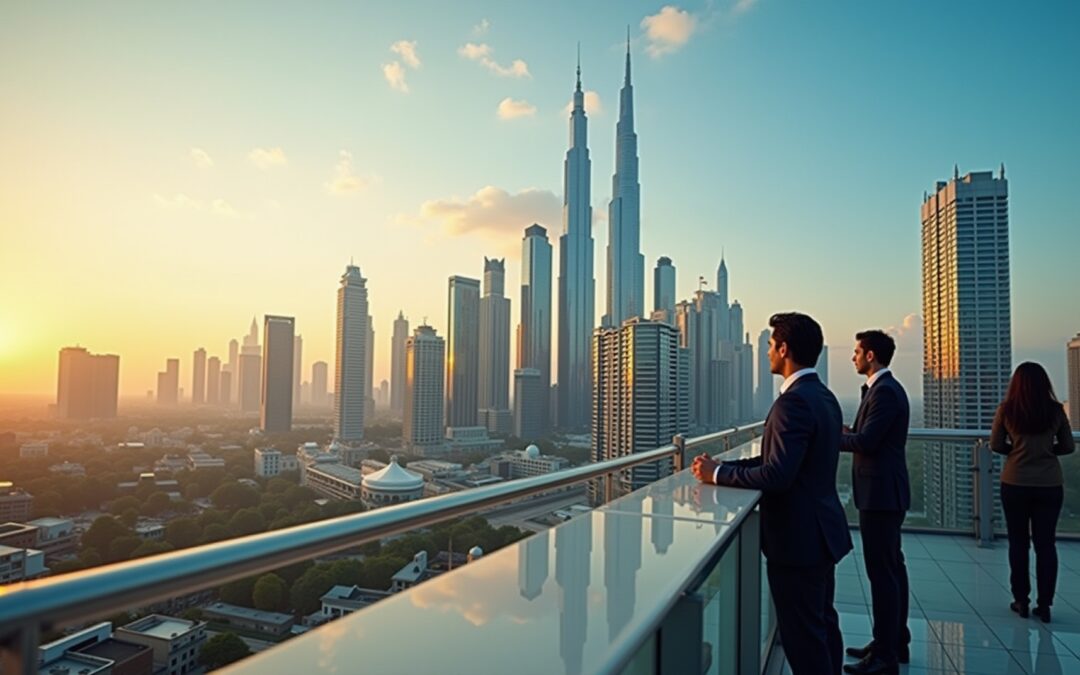
Indian real estate investment is undergoing a strategic transformation. As domestic markets mature and competition intensifies, Indian developers, institutional investors, and capital allocators are increasingly looking beyond national borders for growth. This emerging global orientation is not just about allocation of capital abroad but reflects a deeper evolution in investment approach, asset diversification, and operational sophistication that carries significant implications for India’s real estate ecosystem.
The domestic real estate landscape, particularly in residential and commercial office segments within India’s key metros, is approaching saturation. While demand remains robust, cap rates are compressing and competitive intensity is rising. Indian investors are responding by broadening their horizons to include emerging global hubs in Asia, Europe, and North America. These geographies offer compelling opportunities in stable regulatory environments, superior infrastructure, and premium-grade assets such as Grade A office spaces and next-generation digital economy assets like data centers—sectors currently prioritized within India as well.
Strategic Drivers Behind the Global Shift
This international expansion by Indian real estate stakeholders can be understood through several converging strategic factors:
- Portfolio Diversification and Risk Mitigation: International assets help moderate the cyclicality and regional concentration risks prevalent in domestic portfolios, providing insulation against market-specific downturns and currency fluctuations.
- Access to Institutional-Grade Assets: Global markets offer a wider spectrum of income-generating, premium-quality real estate assets aligned with the investment mandates of growing Indian REITs, private equity funds, and institutional investors seeking stable cash flows and long-term appreciation.
- Adoption of Global Best Practices and Innovation: Engaging with international markets exposes Indian developers to advanced urban development protocols, sustainability benchmarks, and proptech innovations, enabling technology and operational upgrades in their India portfolios.
Implications for Indian Real Estate Leadership and Capital Markets
The outward capital flows underscore the growing institutionalisation and premiumisation of the Indian real estate sector. REITs and private equity vehicles of Indian origin, buoyed by strong domestic track records, are leveraging their capabilities to compete on a global stage, while institutional capital is gaining appetite for assets with established governance and management standards.
For real estate developers and urban growth strategists, this means aligning domestic project execution with international asset quality, sustainability standards, and tenant expectations. Cross-border learnings in infrastructure development, asset management, and leasing practices can elevate the domestic environment, making Indian markets more attractive to multinational occupiers and global investors.
Moreover, the international expansion trend influences capital flows and asset pricing in India. As Indian investors deploy funds internationally, they also bring back analytic rigor, risk management sophistication, and partnership approaches that raise the bar for capital deployment and project delivery domestically.
Future Outlook: Navigating Global Integration
Looking ahead, Indian real estate’s global investment trajectory will be a key driver of sector evolution. Decision-makers must strategically evaluate how international property markets integrate with India’s urban infrastructure priorities and development corridors—particularly as tier II and III cities rise in prominence, supported by improving connectivity and civic amenities.
Developers and capital market participants who embrace global assets and sustainability practices, while adapting these insights to India’s nuanced environment, will be better positioned to meet the expectations of a sophisticated tenant base and global investor community. This global lens strengthens India’s real estate industry, making it more resilient, innovative, and internationally competitive.
In conclusion, the growing global expansion of Indian real estate investors is not merely a trend but a transformative strategic evolution. It reflects a maturation of investment behavior, a deeper integration with global capital markets, and an enhancement of development standards, all of which underpin a more dynamic, scalable, and sustainable real estate ecosystem in India. For industry leaders, understanding and leveraging this trend will be crucial to navigating the future of real estate growth and creating value in a globally connected market landscape.