
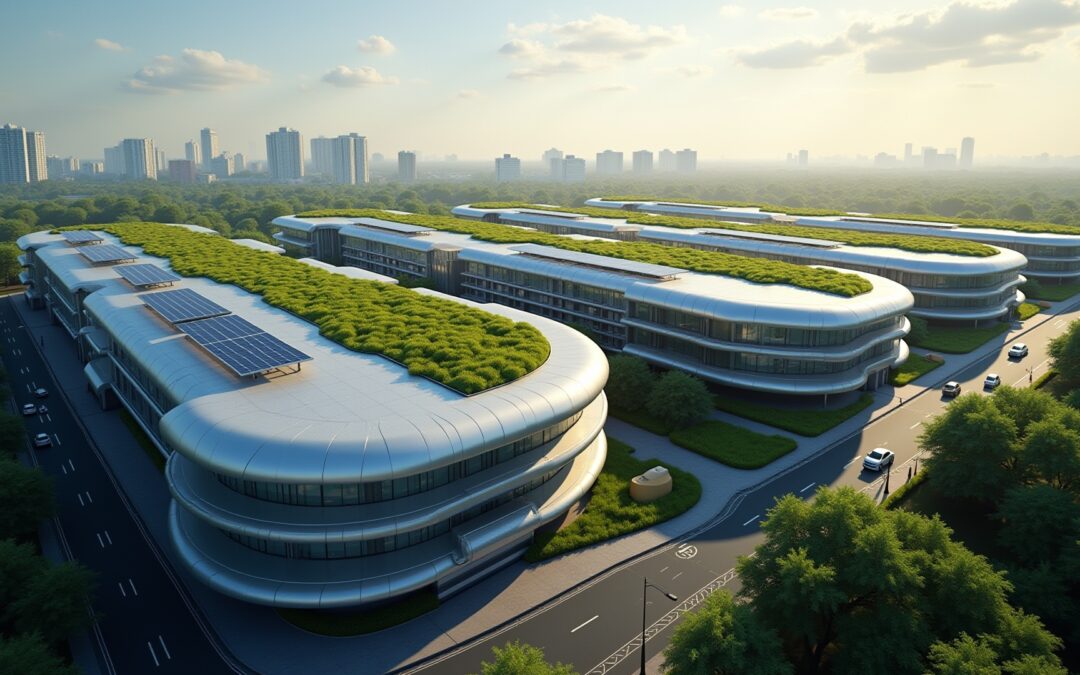
As India’s real estate sector continues its expansive trajectory, sustainability and operational excellence have emerged as pivotal pillars shaping development strategies across residential, commercial, and mixed-use assets. A key yet often underappreciated component driving this transformation is roofing technology. The Roof India 2026 event cast a spotlight on cutting-edge sustainable high-performance roofing solutions, revealing how this innovation transcends traditional construction metrics to become a strategic lever for developers, investors, and urban planners alike.
From Basic Protection to Strategic Asset Enhancer
Roofing systems, historically viewed primarily as weather shields, are now integral to the business model underpinning real estate development and asset management. High-performance roofing combines durability with sustainability, yielding pronounced benefits including energy efficiency, reduced operational costs, and enhanced indoor comfort—factors that increasingly dictate occupier preferences and tenant retention.
For commercial developments, particularly Grade A office spaces and retail environments concentrated in India’s growing urban corridors, these roofing solutions contribute to superior thermal insulation and energy management. This directly influences utility expenditure, reduces carbon footprint, and supports higher building certifications such as LEED and IGBC, which are becoming gating criteria for institutional investors and premium tenants.
Enhancing Asset Quality and Investor Appeal
Institutional investors and Real Estate Investment Trusts (REITs) prioritize assets that demonstrate long-term resilience, lower maintenance overhead, and stable income streams. Sustainable roofing improves building longevity and minimizes unnecessary capital expenditure on repairs and replacements, critical for maintaining competitive yield profiles. In this context, roofing innovations are emerging as risk mitigation tools that align with investor mandates around asset quality and sustainability governance.
Moreover, the expansion of development into tier II and tier III cities—a hallmark of India’s evolving urban landscape—places premium importance on cost-effective but sustainable solutions. Affordable and mid-income housing projects stand to benefit significantly from roofing systems optimized for local climate resilience, enabling developers to meet regulatory mandates while managing construction costs.
Driving Smart Development with Proptech Integration
Roof India 2026 also highlighted the increasing intersection of sustainable roofing with proptech solutions. Digital tools now enable real-time testing, monitoring, and performance analytics of roofing materials, facilitating smarter, data-led decisions across the asset lifecycle. This technological synergy not only drives operational efficiencies but also supports transparency and accountability in sustainability reporting—critical in markets where ESG compliance is becoming non-negotiable.
Aligning Real Estate Growth with Urban Infrastructure and Policy
Policymakers and urban development authorities should note that roofing innovations contribute significantly to strengthening the resilience of urban infrastructure, especially against climate volatility. Incorporating sustainable roofing into regulatory frameworks can accelerate the adoption of green building standards, thus ensuring India’s urban growth corridors develop with environmental integrity and long-term viability.
Conclusion: A Strategic Imperative for Future-Ready Real Estate
For India’s real estate leadership—from developers to investors and policy strategists—the imperative is clear: sustainable, high-performance roofing is no longer a niche technical upgrade but a critical determinant of competitive advantage. By enhancing asset quality, reducing costs, and supporting sustainability credentials, these technologies are set to transform the market dynamics of residential, commercial, and mixed-use developments across India’s diverse urban landscapes. Early adoption and strategic integration of roofing innovations will enable stakeholders to future-proof assets, attract premium capital, and align with evolving regulatory and market expectations in a rapidly maturing sector.