
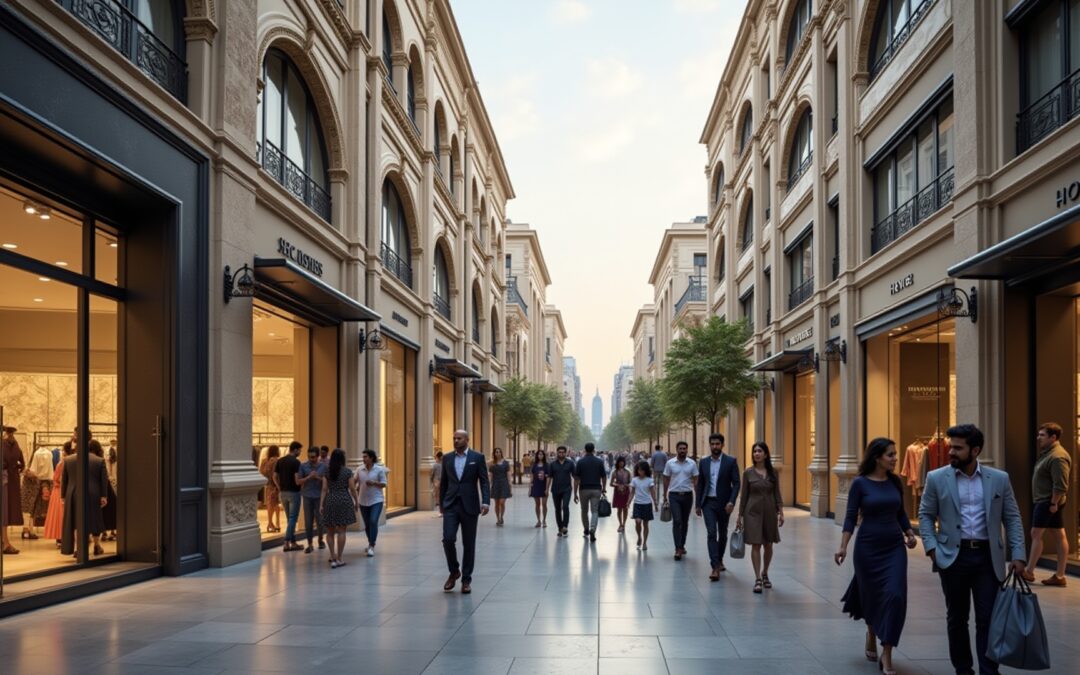
The Indian retail real estate market is undergoing a strategic transformation as high streets outperform traditional malls in rental growth across key urban centres. Locations like Khan Market in Delhi and Linking Road in Mumbai are setting new benchmarks in rent appreciation, signaling a fundamental shift in asset value perception, tenant preferences, and urban retail dynamics. This trend reflects broader changes in consumer behaviour, urban infrastructure, and investor priorities that are reshaping retail real estate strategy in India.
Historically, malls have dominated retail real estate with their controlled environments, concentrated footfall, and curated tenant mixes delivering lifestyle-led shopping experiences. However, the surge in rental values on prime high streets evidences a revived preference for open-air, high-visibility retail corridors embedded within vibrant urban fabrics. Unlike malls, high streets offer retailers substantial branding opportunities through premium frontage, flexible tenancy models, and proximity to established consumer catchments that encompass luxury, mid-market, and emerging brands.
Strategic Implications for Developers and Investors
For developers and institutional investors, the ascendancy of high streets is a call to re-evaluate location strategy and asset repositioning frameworks. High street retail benefits from entrenched urban relevance and historical prominence that often command pricing power beyond that achievable by mall environments. This challenges traditional leasing models and mandates tailored asset management approaches that leverage the intrinsic value of iconic urban corridors.
Moreover, high streets demonstrate resilience in occupancy and rental performance, a crucial factor for REITs and capital allocators seeking stable, inflation-linked income streams. The premium on rental yields in these micro-markets, coupled with their appeal to aspirational consumer segments, supports diversified and future-proof retail portfolios. Institutional capital must now weigh geographic and asset-class diversification to include prime high street locations that benefit from strong demand fundamentals.
Commercial Leasing and Tenant Demand Evolution
Retail leasing leaders must recognize the qualitative shift in tenant demand patterns driven by evolving consumer preferences for experiential retail, convenience, and urban lifestyle integration. High street retail formats enable a broader mix of use cases, from luxury flagship stores to mid-market fashion outlets and specialty businesses, facilitating tenant diversification. Furthermore, these assets often offer more flexible leasing terms and smaller footprints appealing to next-generation retailers seeking agility and footfall transparency.
Urban Growth and Infrastructure Synergies
The rise of high street retail coincides with India’s broader urban development agenda emphasizing infrastructural enhancement and mixed-use intensification. Improved public transit connectivity, pedestrian-friendly streetscapes, and revitalized urban corridors underpin retail vibrancy that contributes to economic activity and social engagement. Policymakers and urban planners have an important role in enabling this renaissance by fostering sustainable, integrated urban retail ecosystems that align with city growth trajectories.
Investor and REIT Considerations
Institutional investors and REIT platforms should strategically incorporate high street assets within their retail portfolios to capitalize on rental yield premiums and stable occupancies. These assets, especially in affluent neighborhoods with robust last-mile connectivity, demonstrate defensive characteristics against retail sector cyclicality. This diversification also aligns with growing investor appetite for tangible, income-generating urban assets supported by strong demographic and economic fundamentals.
Conclusion: Embracing a New Paradigm in Retail Real Estate
The ongoing rental growth disparity favoring high streets over malls is a clear indicator of changing real estate economics driven by evolving urban dynamics, tenant expectations, and capital-market priorities. For developers, investors, and leasing strategists, the imperative is to prioritize retail assets that combine prime urban location, consumer accessibility, and structural resilience. As India’s retail property market matures, embracing high street retail corridors within sustainable urban frameworks will be critical to maintaining competitive advantage and achieving premium returns.
Staying attuned to these granular market shifts will empower industry stakeholders to anticipate trends, optimize portfolio strategies, and contribute meaningfully to the holistic growth of India’s urban retail landscape.