
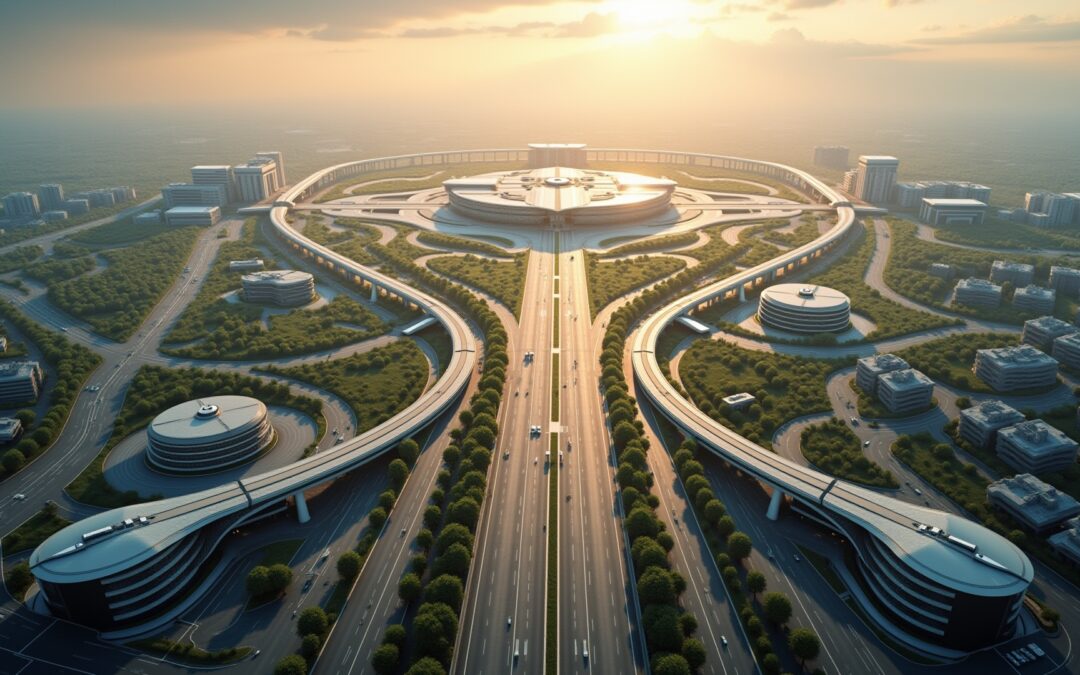
Adani Group’s strategic expansion into airport city development signals a pivotal shift in India’s real estate landscape, marking a sophisticated integration of urban growth, transportation infrastructure, and diversified real estate assets. This initiative transcends traditional real estate projects, coupling the strength of airport infrastructure management with commercial, residential, and logistics development in a seamless, mixed-use model that aligns with India’s evolving economic and demographic demands.
Transforming Real Estate through Integrated Airport Cities
The concept of airport cities is globally recognized as a high-potential urban development model, blending office campuses, retail zones, hospitality, logistics parks, and residential components in the direct vicinity of airports. For Adani, whose vast footprint includes airport operations and infrastructure, this creates a distinctive competitive advantage. By leveraging operational synergies, the group aims to deliver Grade A commercial real estate and mixed-use hubs that are especially attractive to institutional investors and multinational occupiers seeking superior connectivity and integrated facilities.
Strategic Business Implications
Adani’s airport city model offers compelling strategic value for real estate developers and investors. Airports in India have evolved into critical nodes that underpin global trade, corporate mobility, and the expanding digital economy. By aligning real estate development with transit infrastructure, these projects tap into resilient demand from GCCs (Global Capability Centers), logistics companies, and retail tenants focused on convenience, efficiency, and networked operations.
This alignment is poised to generate robust leasing traction and sustainable rental growth, driven by the premiumability of assets located near key airports. Investors stand to benefit from diversified income streams that integrate office leasing, retail, hospitality, and logistics—a blueprint that meets the increasing institutional appetite for integrated, long-term, transit-oriented developments.
Urban Planning and Regional Growth Dynamics
Beyond the immediate commercial rationale, airport city projects play a significant role in urban decentralization. By fostering new growth corridors around airports, often situated in Tier II and Tier III cities, these hubs help mitigate the infrastructure stress on metro cores and align with government initiatives promoting regional connectivity and balanced urbanisation.
These developments also incorporate sustainability principles and proptech innovations, supporting green building certifications and smart city solutions. This approach not only enhances asset quality and efficiency but also positions these airport cities as models for next-generation urban living and working environments.
Implications for Stakeholders Across the Real Estate Ecosystem
For real estate leaders and developers, Adani’s airport city blueprint underscores the importance of integrating land acquisition, infrastructure collaboration, and sustainable design into comprehensive development strategies. Institutional investors gain access to premium, income-diversified assets with built-in demand growth linked to transportation and logistics.
Occupiers, particularly multinational corporations and GCCs, benefit from proximity that reduces travel time, boosts connectivity, and embeds them within vibrant business ecosystems. Meanwhile, policymakers and urban planners view airport cities as catalysts for regional economic development, employment generation, and sustainable urbanisation.
Looking Forward: Strategic Considerations and Industry Impact
Adani’s approach heralds a transformative phase in Indian real estate where infrastructure and property development converge to create integrated business environments. Key decision-makers must consider capital deployment strategies that prioritize long-term asset quality and sustainability standards while leveraging synergies between urban mobility and mixed-use development.
As these airport cities mature, they are expected to set new benchmarks for leasing efficiency, asset premiumisation, and economic impact in emerging urban corridors. This evolution invites real estate stakeholders to rethink conventional development paradigms and align more closely with India’s strategic economic and urban growth objectives.
Ultimately, Adani’s airport city expansion exemplifies the emerging future of real estate development in India—a future defined by strategic infrastructure linkage, multi-sector collaboration, and sustainable, scalable growth that benefits investors, occupiers, and urban communities alike.